
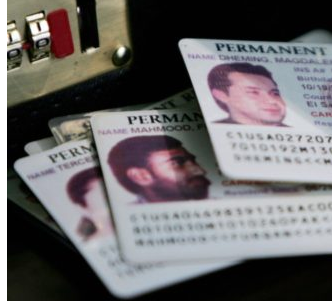


Lobbyists working for thousands of Indian contract workers are promising to overwhelm GOP Sen. Rand Paul’s opposition to a bill which puts many Indian temporary workers on a fast-track to permanent green cards.
“We have lots and lots of doctors in Kentucky, both in Louisville and in Lexington, and in other cities around Kentucky, who can all express how important this bill is to them, and how they literally can’t afford to be doctors anymore,” said Leon Fresco, a former congressional staffer who is quarterbacking the contract workers’ campaign for green cards.
Fresco spoke via phone on June 30 to some of the contract workers in the group, named Immigration Voice. Fresco disparaged critics of the bill which offers U.S. green cards to roughly 1 million Indian graduates over the next decade, providing they take U.S. jobs sought by U.S. graduates:
All of our opponents can be lumped into one of two categories, very simple. Either you are an ethno-racist … Or you are what I would call a for-profit racist, meaning, ‘I have figured out a way to make money from the racist system, and if this racist system goes away, I’m not going to make money anymore.’
Both of those are disgusting, OK? Whether you are a racist or a for-profit racist, you’re still a racist, and anyone who is taking money from ethno-racists or from for-profit racists or benefiting from ethno-racism or from for-profit racism, is going to be called out by us in the next few weeks and no-one — whether it is Sen. Paul currently or any other Senator who wants to object to this [bill] — is going to be able to survive the scrutiny that we are going to bring.
On June 27, Fresco’s plans were hit when Sen. Paul put a hold on the surprise Senate “Unanimous Consent” request made by Utah GOP Sen. Mike Lee, the chief advocate for the outsourcing plan.
Paul’s sudden opposition blocked Lee’s bill – titled S.386 — which is getting almost zero attention from the college-grad journalists in established media outlets.
Fresco’s strategy is to pass Lee’s legislation by stealthy “Unanimous Consent” through the Senate. The quiet process ensures that only Lee needs to support the bill publicly. Once through the Senate without a recorded vote, advocates are confident that House judiciary chairwoman Rep. Zoe Lofgren will rush an identical bill — H.R. 1044 — through the House, likely without a recorded vote, so delivering the final green-card giveaway to President Donald Trump’s desk.
Lofgren can push her copy of the bill through the House because support from many GOP legislators and allows her to trigger a fast-track House approval process.
Lee “will keep bringing up this bill until it passes,” Fresco told the Immigration Voice listeners.
#ICYMI, here is the video where @SenMikeLee who has been championing The Fairness For High Skilled Immigrants Act for almost a Decade, makes a passionate speech to pass #S386 by a process called unanimous consent: https://t.co/1aiX6ulTh2#WantToKnowMore? Join our Sunday Call. pic.twitter.com/sMUGvjK5rP
— Immigration Voice (@immivoice) June 28, 2019
Fresco did not return messages from Breitbart News.
Fresco’s bill is titled “Fairness for High-Skilled Immigrants,” and it would abolish the “country caps” which diversify the annual award of 140,000 green cards to the various foreign nationals of American companies.
The prime beneficiaries of the “country cap” bill are the many Indian contract-workers who arrived on temporary H-1B visas, and who then avoided going home by getting their employers to nominate them for green cards. At least 200,000 Indians have already obtained green cards via the employer process during the last decade.
But the huge number of Indian who volunteered to take Americans’ jobs via the H-1B visas are jammed by the “country cap” on green cards for Indians. Perhaps 300,000 resident Indian contract-workers and 300,000 family members are waiting in several backlogged lines for roughly 23,000 green cards issued to Indians each year.
If Lee’s bill become law, the Indian share of the employer green-cards could quickly quadruple to at least 100,000 cards a year, or 1 million per decade.
That offer of at least 75,000 extra green cards per year would create a huge incentive for more young Indian graduates to take U.S. jobs at very low wages.