
By Sam Jacobs
In America we say if anyone gets hurt, we will ban it for everyone everywhere for all time. And before we know it, everything is banned. — Professor Jonathan Haidt
It’s a common refrain: We have bubble-wrapped the world. Americans in particular are obsessed with “safety.” The simplest way to get any law passed in America, be it a zoning law or a sweeping reform of the intelligence community, is to invoke a simple sentence: “A kid might get hurt.”
Almost no one is opposed to reasonable efforts at making the world a safer place. But the operating word here is “reasonable.” Banning lawn darts, for example, rather than just telling people that they can be dangerous when used by unsupervised children, is a perfect example of a craving for safety gone too far.
Beyond the realm of legislation, this has begun to infect our very culture. Think of things like “trigger warnings” and “safe spaces.” These are part of broader cultural trends in search of a kind of “emotional safety” – a purported right to never be disturbed or offended by anything. This is by no means confined to the sphere of academia, but is also in our popular culture, both in “extremely online” and more mainstream variants.
Why are Americans so obsessed with safety? What is the endgame of those who would bubble wrap the world, both physically and emotionally? Perhaps most importantly, what can we do to turn back the tide and reclaim our culture of self-reliance, mental toughness, and giving one another the benefit of the doubt so that we don’t “bankrupt ourselves in the vain search for absolute security,” as President Dwight D. Eisenhower warned us about?
Coddling and Splintering: The Transformation of the American Mind
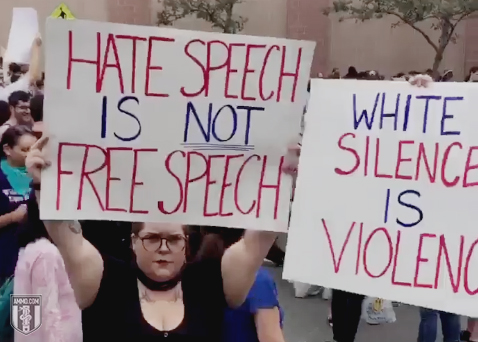

There is an interesting phenomenon involved in coddling: Australian psychologist Nick Haskam first coined the term “concept creep.” Basically, this means that terms are often elastic and expand past the point of meaning. Take, for example, the concept of “trauma.” This used to have a very limited meaning. However, “trauma” quickly became expanded to mean even slight physical or emotional harm or discomfort. Thus the increasing belief among the far left that words can be “violence” – not “violent,” mind you, but actual, literal violence.
In the other direction, the definition of “hero” has been expanded to mean just about anything. Every teacher, firefighter and police officer is now considered a “hero.” This isn’t to downplay or minimize the importance of these roles in our society. It’s simply to point out that “hero” just doesn’t mean what it used to 100 or even 30 years ago.
Once this expansion of a term occurs, there is never any kind of retraction. Trauma now means just about anything, and violence will soon be expanded to include lawful, peaceful speech that one disapproves of. Once this happens, there will be no going back. In the words of Sam Harris:
We (as a society) have to be committed to defending free speech however impolitic, or unpopular, or even wrong because defending that is the only barrier to violence. That’s because the only way we can influence one another short of physical violence is through speech, through communicating ideas. The moment you say certain ideas can’t be communicated you create a circumstance where people have no alternative but to go hands on you.
It is extremely dangerous to begin labelling everything as violence for reasons of free speech, but perhaps even more dangerous is the notion that when anything is violence, nothing is violence. Redefining words as “violence” means that we have little recourse for when actual violence occurs.
The Coddling of the American Mind notes some other concepts that are important as we speak of America’s obsession with “safety” above all else. First, that coddling combined with splintering means that people’s political views are much more like fanatical religious views than anything. They don’t see themselves as having to debate ideas or seek common ground. Rather, the opposing side and its proponents are seen as “dangerous” and must be discredited at all costs. It is worth noting that this is much more common among the left than the right or the center, which has now become more the place where “live and let live” types congregate.
The problem with this goes beyond simply being irritated by irrational people barking at you or at someone else: There is an entire generation of people who are seriously lacking in critical thinking skills. They think that labelling people and name-calling are excuses for a reasoned argument. In the words of Voltaire, “Those who can make you believe absurdities can make you commit atrocities.”
These problems are hardly confined to political radicalism or academia. Indeed, the corporate sector is no stranger to this kind of safety obsession. There is the phenomenon of “woke capital,” where the corporations find the latest celebrity cause-du-jour and use it as a marketing strategy.
There is currently an extreme risk aversion in management science. Companies will now do basically anything to avoid “a kid getting hurt” or someone’s delicate sensibilities being offended.
Education from kindergarten up to the universities is increasingly about teaching doctrines and ideology, rather than critical thinking and problem solving skills. All of this is a dangerous admixture that combines the full weight of the academic, cultural and business elites in this country. And its consequences are far reaching.
Trigger Warnings and Safe Spaces
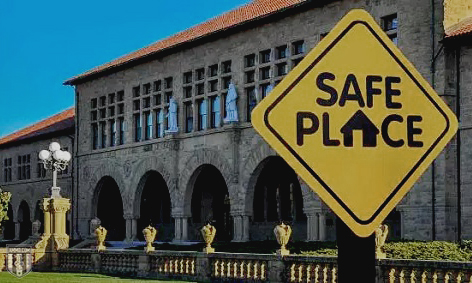

A similar concept is that of a “safe space.” What used to be a term used for a place where people in actual danger of physical harm could express themselves, a “safe space” now means a place where there is no room for disagreement or questions because language is literally violence.
This might all sound very silly and we definitely agree that it is. However, it is quickly becoming de rigeur not just in academia, which is increasingly functioning as a bizarre combination of a daycare center for 21 year olds and an indoctrination program, but also in the corporate world and in the media.
It’s not surprising that such foolishness has reached our corporate elites, because so many figures within that world come from the Ivy League. Harvard Law, for example, was the center of a controversy where they were urged not to teach rape law or even use the word “violate” (which makes it pretty hard to talk about violations of the law). A Harvard professor argued that greater anxiety among students to discuss complicated and nuanced sexual assault cases was impeding the ability of professors to adequately teach their students. This in turn would lead to poorly prepared attorneys for rape victims in the future.
Beyond a simple discussion in the academic sphere, there are student groups on campus who urge students not to attend or participate in class discussions focused on sexual violence. The same student groups advocate for warning students in advance so they can skip out on class and even to exclude “triggering” material from tests. Once again, the real victims here are the victims of sexual assault whose attorneys will be ill-prepared to advise them, to say nothing of the cumulative effect on the prosecutorial environment.
Northwestern University professor Laura Kipnis was subject to a lengthy investigation by a kangaroo court and frivolous Title IX complaints over an article she wrote for The Chronicle of Higher Education about campus sex panics. Top comedians like Chris Rock now refuse to perform on college campuses, a place that has typically been their bread and butter.
Another key term to understand here is “microaggressions” which means just about anything. Offensive statements under this umbrella include things like “I don’t see race,” “America is the land of opportunity” and “I believe the most qualified person should get the job.”
To readers of Generation X or older, this all might sound like a resurgence of political correctness and, indeed, to some extent it is. However, there is something different about the current anti-speech craze sweeping not just campuses, but also boardrooms: Political correctness was, at least in theory, about the elimination of so-called “hate speech” (for example, using “mentally disabled” instead of “retarded” or “little person” instead of “midget”) and also about broadening the canon of literature to include more women and minorities.
One doesn’t need to agree with either objective or be as generous as we are to see that the West has entered a new, accelerated and intensified version of the old political correctness that is qualitatively more dangerous. The “safe spaces” phase of this is about eliminating anything and everything that might be emotionally troubling to students on campus.
This assumes a high degree of fragility among American college students. But perhaps this assumption isn’t totally off base.
The Road to Safety Obsession

So what happened?
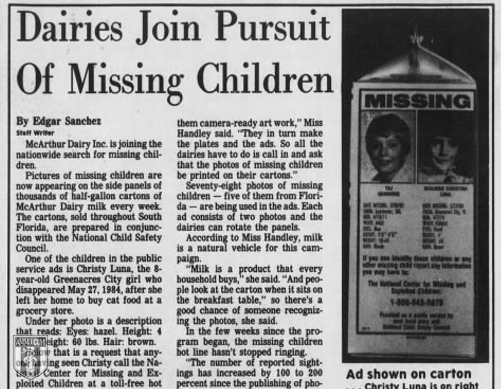
A few things. First, in 1984, the “missing child” milk carton was introduced. America became obsessed with child abduction in response to several high-profile child kidnappings over the period of a few years. Etan Platz, Adam Walsh and Johnny Gosch are just three of the names known to Americans during this time period. In September 1984, the Des Moines, Iowa-based Anderson Erickson Dairy began printing the pictures of Johnny Gosch and Eugene Martin on milk cartons. Chicago followed suit, then the entire state of California. In December 1984, a nationwide program was launched to keep the faces of abducted children front and center in the American mind.