
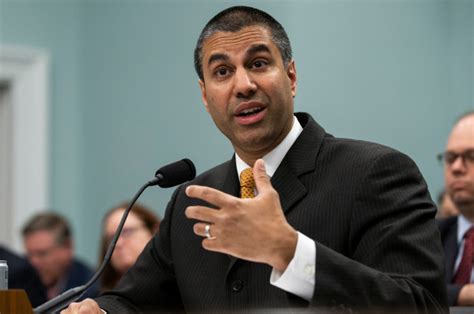


Federal Communications Commission (FCC) Chairman Ajit Pai announced in a statement on Thursday that he will move forward with a rulemaking that would clarify Section 230 of the Communications Decency Act.
Pai announced his decision to move forward with a rulemaking to reform Section 230 as Twitter and Facebook censored a New York Post article saying that, contrary to Biden’s claims, Biden allegedly met with an executive at Burisma when he was vice president. Hunter Biden, Joe Biden’s son, reportedly arranged the meeting while he was working as a lobbyist for the company.
The social media giants’ censorship engendered swift controversy, leading Sens. Josh Hawley (R-MO) and Ted Cruz (R-TX), two members of the Senate Judiciary Committee, to subpoena Twitter CEO Jack Dorsey over his decision to censor the Post‘s story.
Pai noted in his statement that all public officials across the spectrum have expressed concerns about big tech’s legal immunity in Section 230. He explained:
Members of all three branches of the federal government have expressed serious concerns about the prevailing interpretation of the immunity set forth in Section 230 of the Communications Act. There is bipartisan support in Congress to reform the law. The U.S. Department of Commerce has petitioned the Commission to ‘clarify ambiguities in section 230.’ And earlier this week, U.S. Supreme Court Justice Clarence Thomas pointed out that courts have relied upon ‘policy and purpose arguments to grant sweeping protections to Internet platforms’ that appear to go far beyond the actual text of the provision.
Pai then revealed that the FCC’s general counsel said the agency has the legal authority to interpret Section 230; therefore, the FCC chairman declared that he will move forward with a rule to clarify the Section 230. He said: