
by Aaron Sibarium
The job post for LanceSoft, an IT staffing firm committed to “diversity, equality, and inclusivity,” began innocently enough.
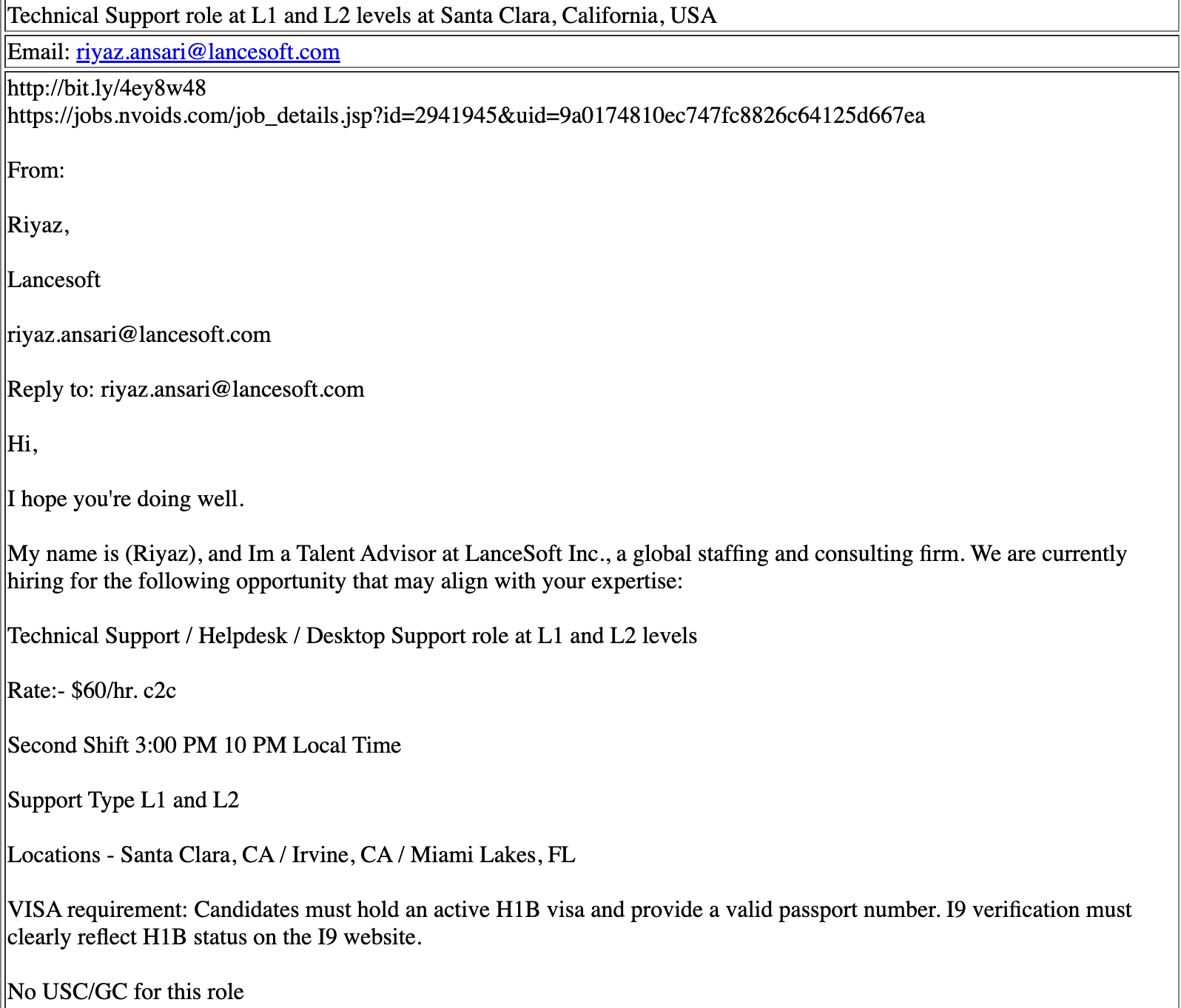
The $60-per-hour role would be based in Santa Clara, Calif., focus on “technical support,” and entail a 3–10 p.m. shift. Posted on Nvoids, an IT jobs aggregator, the ad described LanceSoft as an equal opportunity employer and said that the firm, one of the largest staffing agencies in the country, strives “to be as diverse as the clients and employees we partner with.”
“We embrace people of any race, ethnicity, national origin, religion, gender identity, and sexual orientation,” the Nov. 25 post read.
This particular job, however, would not be open to a very large group of people: citizens of the United States.
In a section titled “Visa requirement,” LanceSoft recruiter Riyaz Ansari wrote that “candidates must hold an active H1B visa”—and stated explicitly that American citizens need not apply.
“No USC/GC for this role,” Ansari wrote, using the acronyms for U.S. citizens and green card holders. He added that “LanceSoft is a certified Minority Business Enterprise”—a status the firm has used to secure public contracts—and touted the company’s “diversified team environment.”
Federal law bars employers from discriminating based on citizenship status. But in the industries most reliant on the H-1B program, which provides visas to more than 700,000 immigrants, advertisements like LanceSoft’s litter online recruiting boards.
The Washington Free Beacon identified over two dozen job postings since 2024 that appear to bar applications from U.S. citizens. The posts were made on a variety of platforms, including Glassdoor and LinkedIn, and typically indicate a preference for H-1B visas, though some allow for other visa types as well. Several of the firms are minority-owned businesses, meaning they receive preferential access to government contracts even as they exclude U.S. workers.