


The U.S. is not for everyone. To keep the founding fathers’ vision alive, it must be exclusive. We are not open to all comers.
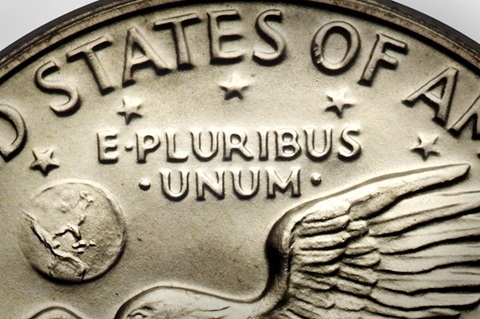
Despite our march toward electronic money, an important message is still jingling in pockets across America, “E pluribus unum.” The Latin phrase stamped on coins and bills means “Out of many, one.” It was coined in 1776 for the original design of the Great Seal of the United States. The Founding Fathers wanted to underscore the 13 colonies that came together as a single nation. Since then, it has come to include many different people forming one nation.
It is a concept so important that in the Coinage Act of 1873, Congress required “E pluribus unum” be inscribed on every coin, along with “In God We Trust.” We should take these mottos seriously.
“For where your treasure is, there your heart will be also,” the Bible reads in Matthew 6:21. Placing the motto on our money elevates its importance and serves as a reminder, in an era where many have forgotten, what it means to be one.
E pluribus unum is a memorial to the collective struggle of the original 13 colonies and the acknowledgement that they shared a culture, traditions, and a similar concern that their rights were being threatened by a tyrannical British Crown. Those similarities brought them together as a new nation and kept them together.
The founders still mourned the bloody cost of the American Revolution — an unwanted task they were forced to endure, to establish freedom and hope for prosperity defined on their own terms.
What was true then is still true today: The culture and values behind the Constitution define who we are and preserve our freedom. The U.S. is not for people who don’t respect that.