
By Stephen Soukup
What Americans mourn isn’t old ballparks or bygone rosters, but the steady collapse of the communities that once gave them meaning, loyalty, and continuity.
The quest for community will not be denied, for it springs from some of the powerful needs of human nature—needs for a clear sense of cultural purpose, membership, status, and continuity. Without these, no amount of mere material wealth will serve to arrest the developing sense of alienation in our society, and the mounting preoccupation with the imperatives of community.
—Robert Nisbet, The Quest for Community, 1953.
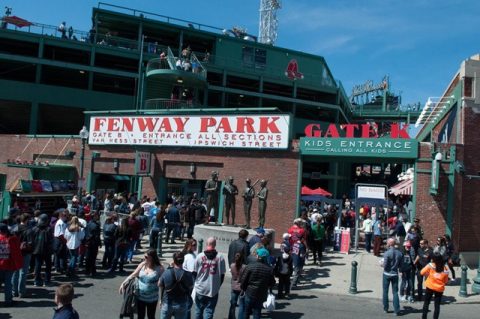
Two weeks ago, the Boston Red Sox posted a video in anticipation of Major League Baseball’s opening day. The video—which the team captioned “Tomorrow”—was a collection of clips from previous opening days at Boston’s Fenway Park—notably, from the 1950s. It was powerful. It was nostalgic. And, as it turns out, it was extremely provocative.
Although it’s highly unlikely that this was the organization’s intention, the Red Sox’s video sparked a massive online conversation about what’s been “lost” in American society over the past several decades. On Twitter, for example, posters lamented that “Boston used to be such an amazing city; now it’s a dump” and that the video showed “a beautiful city and crowd. This world no longer exists; it was willfully destroyed,” and that “Mayor Michelle Wuhan and the Radical Left have done everything in their power to erase this version of the Once Beautiful City of Boston.”
Inevitably, given the current political tensions, some commenters turned their ire on politicians of the near and distant past, blaming the destruction of this former version of America on mass immigration and related policy decisions and failures: “Then in 1965. Democrats said you know what this country needs . . . 1 million Third World foreigners and their entire chain migration families to be made citizens every year!!!”
I empathize with the commenters’ frustration and their wistful melancholy. Indeed, I wholeheartedly share much of their sense of loss. The society shown in the video of opening day at Fenway Park truly no longer exists. And while it is irrefutable that much about society has improved over the last 70-plus years, the specific characteristics of the prior generation identified in the video are worth lamenting—the apparent calm, dignity, and solidity of the crowd that showed up to celebrate together and cheer on “their” team.
At the same time, I also think the online commenters misunderstand the nature of the issues that precipitated the loss that they feel. Something has been lost, but it’s bigger and weightier than just “the way things used to be.” What the commenters miss is the broader social, cultural, and legal evolution that produced the loss and the near inevitability that their anger, disappointment, and feelings of alienation will only grow worse and more profound over the next several years—and probably longer.
What we see in the video—and what makes it so appealing and comforting—is somewhat difficult to pinpoint. It isn’t better-governed or better-run cities. It isn’t greater wealth or more apparent affluence, or even that people were better dressed. And it certainly isn’t greater racial or cultural homogeneity. Many of those things appear in the video and, clearly, were interpreted by some as the source of their nostalgia, but they are merely coincidental. In truth, the source of grief stimulated by scenes of “the America that once was” is the loss of community.