
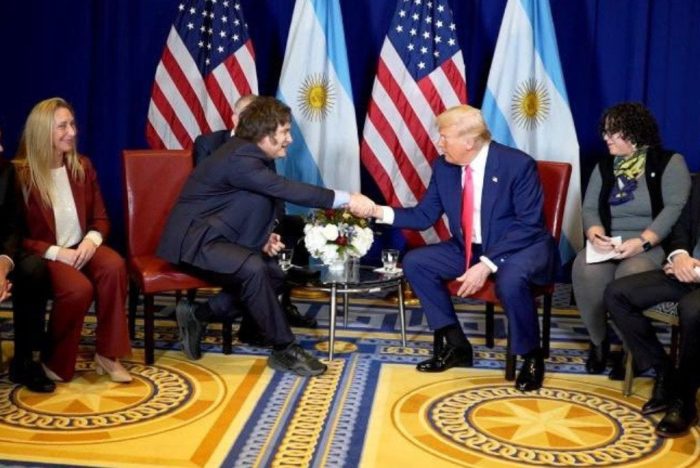
Argentinian President Javier Milei, in a recent Instagram video, called Europe a “nanny state” because of its socialist programs that, in his words, take “proportionally from those who generate the most wealth, violating the principle of property and equality before the law in the process, to redistribute it to the rest of society as services.”
Milei is a former economics professor whose area of expertise is Austrian economics, an economic discipline that largely calls for the end of the central bank and identifies artificial interest rates, currency expansion, and government borrowing as the root causes of inflation. Austrian economists want as little government intervention in the economy as possible because government intervention, regulations, price controls, and rent freezes distort markets. Furthermore, they are vehemently opposed to welfare programs because income taxes used to fund such programs punish the hard-working and industrious while rewarding those who produce little or nothing.
Milei went on to say, “Without requiring any kind of contribution, the population that paid taxes for so many years ends up being defrauded, a system on the brink of collapse. As a result of these actions, Europe has been left without growth, without the rule of law, and today it’s becoming clear that its leaders have also lost all political credibility.”
One of only about ten conservative world leaders, Milei is a Trump ally. Like Trump, he is a strong supporter of El Salvador’s President Nayib Bukele, who brought his country’s murder rate to near zero by locking up gang members.
Milei opposes socialist multilateralism and BRICS but strongly favors free trade. Milei’s government has downgraded Argentina’s participation in the G20, the Community of Latin American and Caribbean States, and Mercosur; withdrawn from the World Health Organization; pulled out of COP29; and reduced engagement at the UN Human Rights Council. His withdrawal from multilateral bodies tracks closely with President Trump’s approach.
Under his administration, Argentina’s economy has seen dramatic improvements. Monthly inflation fell from 25 percent in December 2023 to around 2 percent, and poverty dropped from 52.9 percent at its 2024 peak to 28.2 percent by mid-2025. In 2025, GDP expanded 4.4 percent, and Argentina achieved its first fiscal surplus in 14 years.