
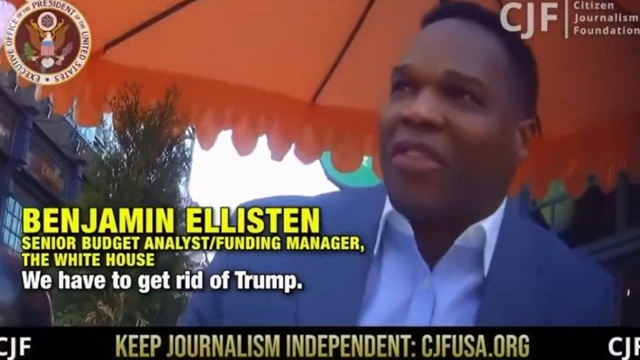


James O’Keefe is back with another undercover sting, and this time the cameras were rolling inside the President’s own orbit.
O’Keefe Media Group released hidden-camera video on Tuesday identifying two individuals it described as White House insiders: Maxim Lott, identified as a Special Assistant to President Donald Trump on the White House Domestic Policy Council, and Benjamin Ellisten, identified as a budget analyst manager within the Executive Office of the President. The footage shows both men making candid remarks about how policy gets made and, in Ellisten’s case, expressing sharply anti-Trump sentiments, including a line about needing to “get rid of Trump.”
O’Keefe posted the primary video to X on Tuesday afternoon.
WHITE HOUSE CONFESSIONS: President Trump’s Special Assistant on the White House Domestic Policy Council Admits Advisors Make Decisions Based on What “Feels Like a Good Idea,” Says “There’s No Cost-Benefit,” Reveals WH Staff Independently Shape Domestic Policy Based on Their Own… pic.twitter.com/03zNK3MB3q
— James O'Keefe (@JamesOKeefeIII) May 12, 2026
The video quickly drew attention because these are not random federal employees buried in some distant agency. The Domestic Policy Council and the Executive Office of the President sit at the center of how presidential priorities become real policy. If the identifications are accurate, these individuals occupy roles designed to serve the President directly.
Gateway Pundit published a detailed report on the video and the fallout:
Gateway Pundit reported that O’Keefe Media Group released undercover video on Tuesday featuring two people it described as White House insiders. The article identified Maxim Lott as a Special Assistant to President Trump on the White House Domestic Policy Council and said Lott told the undercover journalist that policy decisions can originate below President Trump’s level, with staffers interpreting what they think he would say. The same report said Lott acknowledged that some proposals move forward because officials believe the base supports them, without the kind of formal cost-benefit analysis voters would expect for consequential domestic policy decisions.