
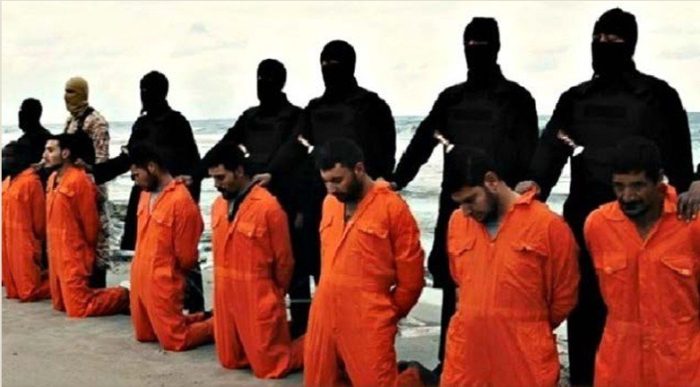
Those who claim that there would be peace in the Middle East if Palestine became a state miss the point that, while the Israel-Gaza conflict grabs headlines, it is actually a very small component of a much larger pattern of Muslim violence that continues across the Middle East, North Africa, and sub-Saharan Africa.
Between 1999 and 2026, approximately 1,140,000 to 1,600,000 people were killed by Islamic extremists or Islamic religious-nationalists, while 10,125,000 to 14,215,000 were displaced. The victims were a wide range of ethnic and religious minorities, including other Muslims whom perpetrator groups considered heretics, infidels, or ethnic inferiors.
The victims were Yazidis, Alawites, Druze, Sunni Arabs in Iraq, Kurds, Jews and Israelis, Christians in Nigeria, Copts in Egypt, Assyrians and Syriacs, non-Arab Darfuris including the Masalit, Fur, Zaghawa, Tama, and Erenga, Christians in Sudan and the Nuba Mountains, Christians in the Democratic Republic of the Congo, Christians in the Central African Republic, Christians in Ethiopia and Amhara, and Christians in Eritrea.
The perpetrator groups include ISIS, al-Qaeda, Hamas, Hezbollah, the IRGC, Boko Haram, ISWAP, Turkey and Turkish state forces, the Sudanese Armed Forces, the RSF/Janjaweed, SPLA-N breakaway militants, Séléka/ex-Séléka, anti-balaka, the Oromo Liberation Army, Amhara Fano militias, and the Eritrean government.
Islamic State
ISIS’s ledger against religious minorities is the longest in this survey. In August 2014, ISIS fighters swept into Sinjar and began a campaign the UN Human Rights Council later formally recognized as genocide against the Yazidi minority, 3,000 to 10,000 killed or captured in the opening assault, roughly 3,100 murdered outright, and over 6,800 women and children trafficked into slavery. A UN-backed household survey later confirmed the scale. Eleven years on, 190,000 to 200,000 Yazidis remain displaced in camps because Sinjar itself is still unlivable.
The same campaign reached Iraq’s Assyrian Christians on the Nineveh Plain that same August, driving the entire Assyrian population from the region, and reached Syria’s Assyrians six months later. On February 23, 2015, ISIS attacked 35 Khabur Valley villages, abducting 259 residents according to the most granular accounting available, though some retrospective reporting cites a toll as high as 800, a figure this survey treats as unverified pending independent corroboration.
ISIS’s war against Syria’s Kurds produced the single largest combatant toll in this entire document. The Kurdish-led SDF lost more than 11,000 fighters destroying the physical caliphate between 2014 and 2019, a toll independently confirmed at the time of ISIS’s territorial defeat. Along the way, ISIS massacred Kurdish civilians directly. The 2014 siege of Kobani alone killed more than 800 in six weeks of ground fighting, and a second incursion in 2015 resulted in the execution of 223 to 233 civilians in a single raid.
ISIS turned on Syria’s Druze twice. In July 2018, coordinated suicide bombings and house-to-house shootings in Sweida left 216 to 258 dead, at the time the worst violence to reach a province largely insulated from Syria’s war. Egypt’s Copts were struck repeatedly during the same period. ISIS bombings across a single six-month span in 2017 killed more than 110, and a February 2017 kill-list campaign in North Sinai drove 100 of 160 Christian families from the province entirely.
ISIS’s regional affiliates have exported the same tactic specifically against Christians. In eastern Congo, the ISIS-affiliated Allied Democratic Forces has made church attacks a signature tactic. A September 2025 funeral-wake massacre in Ntoyo village killed more than 60, with a coordinated same-night raid nearby bringing the two-day total past 100.
A July 2025 night-mass attack in Komanda killed at least 43 worshippers, according to UN peacekeepers on the ground. An April 2026 Holy Thursday raid on Bafwakao village killed 43 more, several of them beheaded, during Holy Week itself. Nigeria’s ISWAP, born of a 2016 Boko Haram split and formally pledged to ISIS, operates alongside Boko Haram in the section below.
Nigeria
Nigeria has been the deadliest country on earth for Christians for years running. Annual tolls fluctuate depending on tracking methodology, but Open Doors’ conservative count alone puts the number at 3,100 to 4,118 killed per year across the most recent reporting periods, accounting for 72 percent of all Christians killed worldwide for their faith in 2025–26 alone. A contested but widely cited 14-year figure from the International Committee on Nigeria puts the cumulative toll at 52,250 killed.
The violence predates the insurgency by a decade. Christian-Muslim communal riots have recurred since Nigeria’s 1999 return to civilian rule, killing more than 10,000 before Boko Haram existed. These included the 2000 Kaduna sharia riots (1,000 to 5,000), the 2001 Jos riots (over 1,000), and the 2004 Yelwa and Kano riots, with Yelwa alone reaching 500 to 900. What changed after 2009 was character rather than scale: sustained jihadist insurgency replaced communal riots under Boko Haram and its ISWAP offshoot.