
by
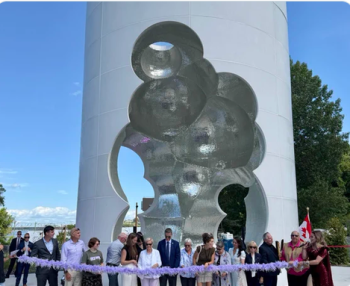
Ottawa’s new ‘Thunderhead’ monument was unveiled with drag queens and a ‘boa cutting’ as former Prime Minister Justin Trudeau attended alongside prominent pro-LGBT activists.
(LifeSiteNews) — On August 21, dignitaries gathered near the intersection of Wellington Street and Portage Bridge in Ottawa, Ontario, to unveil Thunderhead, billed as Canada’s “first national 2SLGBTQI+ monument.” In attendance were former Prime Minister Justin Trudeau, Governor General Louise Arbour, and LGBT activists such as former MP Svend Robinson.
The monument is a 30-foot white concrete column with cloud-shaped openings; the interior is lined with thousands of mirrored tiles for a “disco ball” effect. The surrounding park includes an “interpretive wall” that details the history of LGBT activism in Canada, with a focus on the LGBT “purge” it was built to commemorate, in which the government investigated and dismissed LGBT-identifying people from federal jobs.
Or, as Todd Ross of the LGBT Purge Fund put it: “It’s inverted clouds that are inside of this pillar. And then really to gay it up, we lined it with mirrored tiles so it feels like you’re inside of a giant disco ball.” The taxpayer money for the monument came from a 2018 class action suit launched against the government by a group of those who had been dismissed from their jobs; they hope the new pro-LGBT park in the heart of the capital will be a place of “protest.”
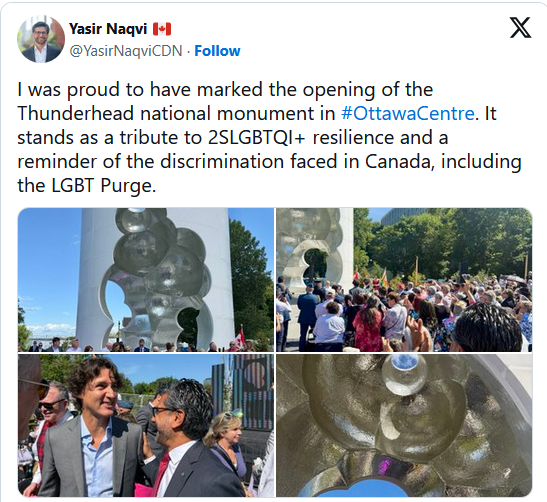

According to the LGBT Purge Fund, the monument “acknowledges the colonial roots of homophobia, biphobia, and transphobia, honours the resilience of 2SLGBTQI+ communities, and invites Canadians to reflect on the work that remains.”
It’s worth noting that the phrase “two-spirit” was first used in 1990 after it was both coined and adopted at the Third Annual Inter-Tribal Native American, First Nations, Gay and Lesbian American Conference held near Winnipeg. The first written record surfaced all the way back in … 1991, with references to a “Two Spirited Dance Troupe.”
The term first came to Myra Laramee, a Cree elder, in a dream; she then allegedly proposed it to the conference, after which other activists there began pushing it. Just 25 years later, dignitaries, historical textbooks, and major monuments treat the term as if it is a historical one rather than an activist invention (or dream, if you prefer).