
by
This is an exciting story for the American heartland, and also for America in general.
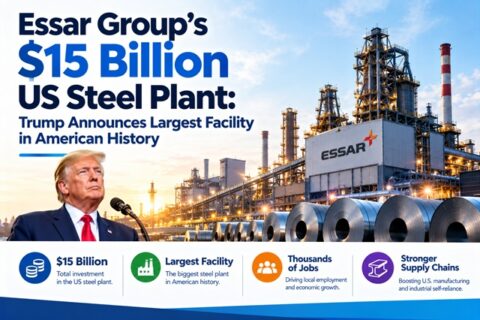
Monday’s news cycle brought an exciting story for both the manufacturing industry and America’s heartland: Mesabi Metallics has announced a new $15-billion steel mill to be built in Iowa, along the Mississippi River.
With an expectation of being up and running by 2030, the mill will be the largest ever in the United States, being budgeted to reach approximately 10 percent of current American steel production within a couple years of startup.
The statistics shared at the announcement anticipate five or six thousand construction jobs for its construction in Iowa; about 1,750 permanent employees at the plant; and a related influx of jobs and activity at the firm’s iron mines in northeast Minnesota, which will supply the lion’s share of raw materials for this state-of-the-art facility.
That’s a good story: up to 6,000 long-term temporary jobs in construction, and up to 1,750 permanent jobs in the steel industry. Coming at election time as it does, this would be a shot in the arm if that were all there was to it.
But there’s much more to this than those simple statistics, because of the Invisible Hand of economic activity. Most of the benefits of this plant don’t show up in a news story like this, because they can’t be categorized with specific promises and numbers — but if we watch this space for the next few years, we will find that, much like the natural magnetism we always think of when dealing with the metal in question, this project will create many times more economic opportunities.
Let’s start with the plant itself. Building this plant means the installation of building materials, overhead cranes, steelworking machinery, industrial conveyors, and warehouse racking. These billions of dollars aren’t all spent on the employees at the site; they’re spent on the manufacturers of all these materials, all over the country, and the transportation to bring these materials to the job site.
Then, once it’s built, there will be a permanent network of transportation activity bringing the ore from northeast Minnesota to the eastern Iowa plant, either by truck or by rail.
This not only creates jobs for those transportation workers, but also creates important volume for port operations and transshipment hubs as goods move from rail to truck or from lake vessels to river vessels. Many of our inland ports have fallen into disuse since globalization increased container traffic on the coasts; our inland waterway industries will welcome some new business.
Once the plant is built and running, it will do all the things in the community that a multi-billion-dollar business always does. It doesn’t just sit in its own space without interacting with the rest of the world; it joins the local economy and creates all sorts of new activity.
A new manufacturing plant — no matter whether it’s an appliance manufacturer or automaker or injection molder or steel mill — will pay local property and income taxes (and so will its employees). It will employ groundskeepers and facilities workers and cafeteria and laundry services.
The plant will create new demand for hotel and restaurant activity, as vendors and customers travel there to tour the plant, visit buyers and salesmen, and attend conferences and bid meetings.
News coverage gives the impression that this is a steel story, but it’s not; it’s a community story. You don’t have to be in the mining business, the steel business, or the transportation business to benefit from a $15-billion steel mill. Owners and employees of restaurants and diners, karaoke bars and theaters, hospitals and landscapers, not to mention the myriad shopkeepers of local retail, from bookstores to clothing shops, from dry cleaners to toy stores, will all benefit.
We shouldn’t need to point this out; it should go without saying. New economic activity creates more new economic activity; it all grows and flourishes like healthy vegetation in good weather.
During the rise of what we now call globalism — the loss of industries to primarily third-world producers — rural America was hollowed out.
First the textile plant closes, then so do the hotels, diners, and schools that supported its employees and vendors. First the factory closes, then so do the shops, churches, and restaurants that had supported its workers and their families. This scenario has been played out thousands of times across the country, in thousands of communities.
President Trump’s tariff program has been presented by the press as being all about taxes — they make it look as though we’re just punishing the importers for importing, bringing more revenue to Washington to make up for the businesses we’ve lost. To be fair, it’s an understandable spin, since President Trump’s own rhetoric sometimes emphasizes that aspect of it.
But this big picture, employment growth in the heartland, is really the heart of the Trump administration’s tariff policies.
Cutting tax rates and regulatory barriers can bring back business slowly, but it takes a high-tariff, protectionist climate to do it quickly. And yes, we needed to do it quickly.
The Mesabi Metallics steel plant is the Trump economic plan in a nutshell. It’s a perfect example of why Trump’s policies were needed, and how they work for everybody, not just a select few…and why it’s critical that the midterms provide the Trump administration with the adrenalin it needs to keep up the good work, so that this model can be repeated thousands of times in the years to come, from coast to coast and border to border.