
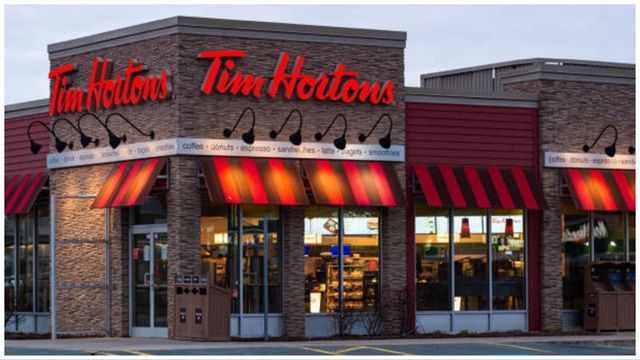

Court filings show temporary foreign workers made up as much as 83 per cent of staff at one Eastern Ontario Tim Hortons, with similar figures seen across the board.
Six Tim Hortons restaurants in Eastern Ontario have gone bankrupt, with their operator blaming federal restrictions on the Temporary Foreign Worker Program for contributing to the collapse.
MGB Ventures Inc., which operated franchises in Alexandria, Hawkesbury, Dunvegan, Vankleek Hill and L’Orignal, told Ontario Superior Court that Ottawa’s crackdown reduced its access to foreign labour, according to Blacklock’s Reporter.
“The Government of Canada significantly restricted Temporary Foreign Worker programs,” the company wrote. “As a result the company employs a lower number of temporary foreign workers.”
Court filings reveal just how heavily some of the restaurants relied on foreign workers.
Of the company’s 156 employees, 41 were temporary foreign workers. At its Alexandria restaurant, 19 of 23 employees — 83 per cent — were foreign workers. At its Dunvegan location, migrant workers accounted for 15 of 25 employees, or 60 per cent.
Management said recruiting workers in the smaller Eastern Ontario communities where it operated was difficult.
“To meet its workforce requirements the company participates in Temporary Foreign Worker programs,” the company told the court.
click below to watch


The operator also faced substantial debts, owing $1.6 million to the Canada Revenue Agency, $1 million to Scotiabank and $600,000 to the Crown-owned Business Development Bank.
Ottawa tightened the TFW program in 2024, restricting low-wage hiring and requiring employers to demonstrate efforts to recruit Canadians and eligible workers already in the country.
The government partially reversed course this year, introducing “targeted, time-limited measures” that allowed restaurants in eligible rural regions to increase their quotas for low-wage temporary foreign workers.
Tim Hortons franchisees had lobbied Ottawa for greater access to foreign labour, warning that tens of thousands of restaurant jobs could otherwise remain vacant.
“Persistent labour shortages continue to limit the restaurant industry’s operational success, forcing businesses to focus on survival rather than expansion,” an October 2025 federal memo quoted operators as saying.
Dr. Sylvain Charlebois, director of Dalhousie University’s Agri-Food Analytics Lab, offered a sharply different assessment after news of the bankruptcies emerged.
“Six Tim Hortons restaurants in Eastern Ontario have gone bankrupt. According to Blacklock’s, their operators blame changes to the Temporary Foreign Worker Program,” Charlebois wrote on X.