
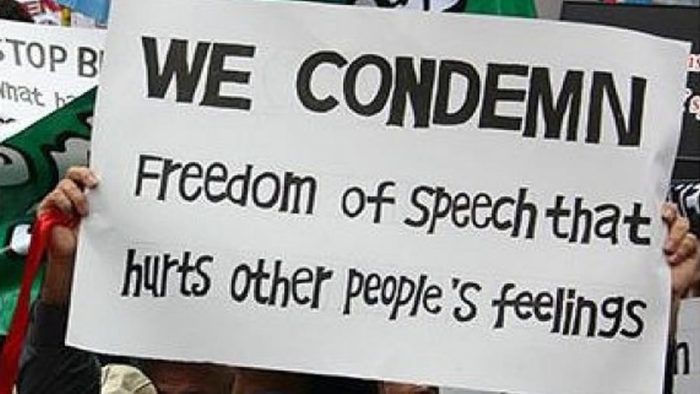


London admits it can’t force U.S. tech companies to remove lawful speech. It’s already talking about a law that would.
Russell Brand, the comedian and actor-turned-anti-establishment firebrand, was convicted this month of one count of rape and three counts of sexual assault after a trial that drew sharp criticism from his supporters, and was sentenced to 10 years and six months in prison. But now the U.K. is trying to censor him too.
On Nov. 15, Laura Brand stared into the camera and read her husband’s defiant message to more than 6 million YouTube subscribers. Russell Brand, now behind bars in a British prison, maintained his innocence. Within days, the British government asked Google to erase his words from American screens, a move that looked very much like an attempt to stifle dissent.
This story is about something so much bigger than Brand’s conviction, unjust though it may be: Who gets to decide what Americans can say — or see — online? When foreign governments attempt to dictate speech on U.S. platforms, the First Amendment is on trial.
The censorship request came from the prison service via what the BBC describes as an “established mechanism” with tech companies. Reports vary on whether a minister actually met with the company.
“It is only right that the Government asks for content that is distressing for victims to be taken down and we strongly believe YouTube should remove this content,” a Ministry of Justice spokesman said. “Removal ultimately depends on the platform’s own terms.” Prime Minister Andy Burnham has called on companies to “show some decency and take these videos down.”
Housing Minister Matthew Pennycook admitted to BBC Breakfast, “We don’t have any power to mandate a removal of content. That is up to Google.” But the government has badgered the company to censor the video because it claims “victims shouldn’t have to see this content.”
That argument doesn’t hold up. A convicted man declaring his innocence does not cause significant harm to anyone. Defendants maintain their innocence after verdicts all the time, often while appealing, and a free society should let them do so. Nobody is forcing Brand’s alleged victims, or anyone else, to watch his videos.
But British leftists can’t help themselves. Labour MP Jess Phillips said a second Online Safety Act is “very likely.” The first, passed in 2023, requires sites with British users, including American websites and search engines, to police “illegal” and “harmful” content, and lets Ofcom, the U.K. communications regulator, fine companies that don’t comply. Conservative leader Kemi Badenoch responded, “Immediately demanding that private platforms take down without looking at whether a law has been broken is not where I would start from.”
“We’re aware of the new content and our teams are investigating,” Google told the BBC. The BBC reported that Google had denied the request, but Pennycook has downplayed any suggestion of a refusal. The video was still up as of Tuesday morning.