
Marijuana use ‘not as big a deal’ as it used to be
Marijuana use ‘not as big a deal’ as it used to be
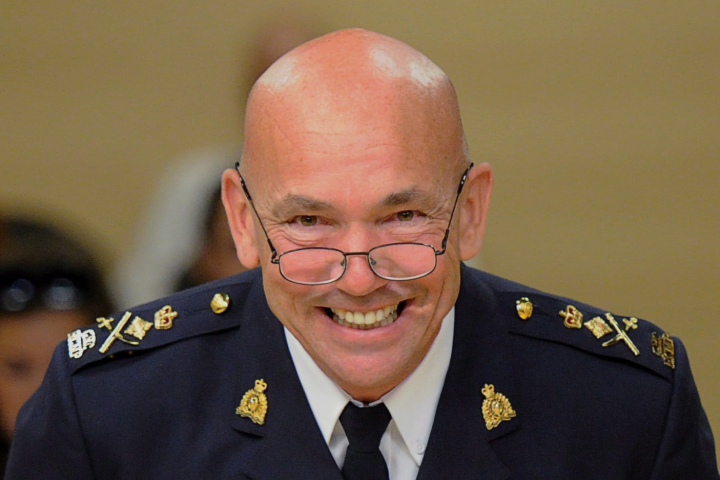
RCMP Commissioner Bob Paulson is sitting in the back corner of Nate’s Deli in the city’s southwest end, sipping one of several afternoon cups of coffee spiked with milk and a spoonful of sugar.
He wears an official white short-sleeved shirt but he’s taken off his jacket and hat – the one with the iconic yellow stripe.
The country’s top cop – who at 56 has three grown children and a seven-month-old son – arrived alone at his preferred spot for smoked meat and “real good fries,” not far from the Mounties’ national headquarters.
No assistant, no media handler, armed only – at least in the obvious sense – with a disarming smile. It’s one he deploys on various visitors, wanted or not, who stop by the table to say hello.
A three-decade veteran of the force who spent a majority of his career in British Columbia, Paulson makes it clear from the get-go he doesn’t want to get political.
He may be a cop at heart – but now he’s the boss. And with that comes a relationship with government.
“We need to have a subordinate relationship in some senses. Not in terms of our ability, who we’re going to investigate, but in terms of – we’re not a police state, last time I checked,” Paulson says.
“I have views, Bob has views, but they’re not the commissioner’s views, and if the commissioner starts weighing on issues that are of political nature, then he’s in the wrong business.”
He won’t talk about the Mike Duffy-Nigel Wright investigation – in particular, why Duffy was charged with bribery and Wright wasn’t.
“As soon as the court proceedings are done, the file will be wide open,” he says.
He even suggests a previous interview he did on the subject went too far. “I probably should have tempered that a little bit.”
READ MORE: RCMP Commissioner Paulson: ‘Shouldn’t be very long’ for Nigel Wright details
“What’s vitally important to me and the organization is that we not only be seen as independent and competent, but that we actually deliver independent and competent policing,” he adds.
“So it matters not really to me if it’s a breach of trust allegation, or a robbery charge, or a cultivating marijuana case – probably a bad example because it’s not important anymore…”
After the smoked meat sandwiches, we return to the subject of marijuana. Echoing the Canadian Association of Chiefs of Police, Paulson says ticketing, rather than charging for possessing small amounts of cannabis, is one of the options now being considered.
“I don’t think marijuana usage is as big a deal as it used to be. It’s still vulnerable to exploitation to organized crime, but you know, less and less as it becomes more and more commercially available,” he says.
He’s more concerned with eradicating impaired driving – and that means setting court-accepted standards for limits on both alcohol and drugs.
While he takes pains to distance himself from policy-makers, Paulson can’t help but let his policing experience come through.
And with that, an opinion.
When he was in Vancouver, he tells me, he used to take his children through the Downtown Eastside – to show them what life as an addict was like.
“The people that use drugs are not the people we got to be bothering, right? We’ve got to be sort of helping them. Some of the best people I’ve ever run across in my policing experience: heroin addicts,” Paulson says.
“They’re sick. And you know they do crime, it’s sort of subsidiary, that if they’re doing crime it’s because they need to get heroin. And so they’re doing all sorts of property crime. But when you actually sit down and talk to heroin addicts, they’re really nice people.”
On harassment, and privacy
Paulson started in the job almost three years ago amidst what he calls “the troubles” – an ongoing controversy surrounding the culture of the national police force that dogged his days, at least the early ones.
“I entered the job with the harassment thing blowing the lid off the place,” he says. “It was like here’s the new commissioner, and then all we were talking about was that.”
He insists the problem has been dealt with, through a new leadership structure, and now exists only to the same degree as anywhere else.
“It’ll never be resolved,” he says.
“I don’t know when that’s over. I don’t know how we can say, we’re just like every other workplace now, we’ve got reliable systems in place that are delivering on these issues, so everybody take it easy, let’s all get our mind back to public safety issues and security issues.”
For Paulson, it isn’t just about sexual harassment – though he admits to “no shortage of horror stories” on that front, some of which he has characterized as “old news.”
“It’s more a…cultural issue around authority, around leadership and around accountability, and ultimately it was about a respectful workplace.”
Has it gotten better? “Unquestionably. It’s always been a good place to work, but there has been this sort of delayed transition into modernity.”
I ask him if he’s more looped in than his predecessors.
“Anticipating that previous commissioners may read your product here – I am,” he says.
“People will say to me when I’m asserting interest, ‘Commissioner, you getting in the weeds there a little bit?’ Well maybe, but they’re my weeds.”
One pressing concern now is the issue of privacy. The Supreme Court ruled last June that police must get a search warrant before obtaining basic customer information from Internet service providers.
Paulson says since the ruling, companies have stopped giving information to the RCMP on demand.
“It makes our job impossible,” he says.
“There’s got to be a sweet spot in all of these discussions. Because privacy is absolutely vital, and you’d be amazed at how attentive we are to privacy, believe me.”
He said telecom companies would provide basic information in national security or child exploitation cases, for example, when police believe there may be wrongdoing but don’t have enough evidence for a warrant.
“Then what do you do? You can’t get a warrant, so ok, sorry nothing we can do. Come back when you got pictures.”
Still, he adds, “We have to respect the law.”
What has surprised him most in the job is “how much people count on you” in every facet of the $5-billion, 30,000-employee organization.
“I was surprised how much I matter,” he says.
“You are ultimately responsible for all of these things – and I am. It surprised me, the scope and scale of that.”