
Lancet medical journal under attack for ‘extremist hate propaganda’
Lancet medical journal under attack for ‘extremist hate propaganda’ over its coverage of the Israeli-Palestinian conflict
One of the world’s oldest and most venerable medical journals is under attack from an international group of more than 500 doctors over its coverage of the humanitarian disaster caused by the Israeli-Palestinian conflict.
The Lancet and its editor, Richard Horton, have been targeted over what the group claims is the “grossly irresponsible misuse of [the journal] for political purposes”. The controversy was sparked by an article deemed to be critical of Israel’s conduct in Gaza.
The protesting doctors, including five Nobel laureates as well as Lord Winston, the broadcaster and IVF pioneer, style themselves “concerned academics”, and accuse the journal of publishing “stereotypical extremist hate propaganda”. They also accuse the journal’s owner, the publishing firm Reed Elsevier, of “profiting from the publication of dishonest and malicious material that incites hatred and violence”.
Read more: These academics are fighting a lost battle
The doctors threatened to boycott the journal if Reed Elsevier does not “enforce appropriate ethical standards of editorship”.
Observers say it is the most serious threat to The Lancet and free speech in academia since the journal’s first campaigning editor, Thomas Wakley, faced a series of lawsuits after attacking the incompetence, nepotism and greed of the medical elite shortly after it was founded 192 years ago.
Horton, who has edited The Lancet since the mid-1990s, has built it into a widely admired beacon for global health. But his uncompromising approach has made him enemies, especially among those who see him as a supporter of the Palestinian cause. He established a Lancet-Palestine Alliance with academics in the West Bank, to improve coverage of health issues in the region.
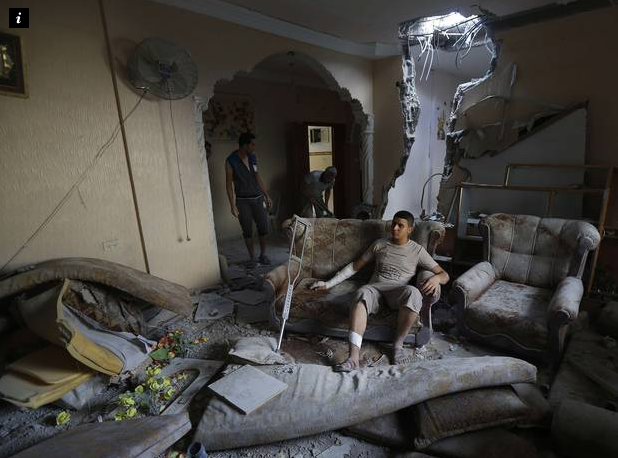
The trigger for the assault on his editorship was an article published last July during the Israeli attack on the Gaza Strip, which included eyewitness accounts of the medical impact on civilians but, controversially, did not include an acknowledgement of Hamas’s role in the war.
“An open letter to the people of Gaza” provoked a fierce debate in The Lancet’s correspondence columns, with some complaining it was “anti-Jewish bigotry” and others that medicine “should not take sides”.
It later emerged that two of the signatories of the open letter had circulated emails containing a video suggesting sympathies with an anti-Semitic American white supremacist. Both apologised and Dr Horton also subsequently apologised for the “offensive video” during a visit to Israel. But he did not withdraw the article.
In October, the Lancet’s ombudsman investigated the complaints and criticised the open letter but said this did not justify retracting it. However, this did not satisfy the journal’s critics and the dispute has rumbled on.

In the latest and most serious development, the protesters, led by Professor Sir Mark Pepys of University College London, mustered 396 professors and specialists from around the world to sign a complaint which was submitted to the board of Reed Elsevier last month. The complainants demand that the publisher retract the open letter, apologise for its publication and ensure “any further malpractice at The Lancet is prevented”.
They threaten an academic boycott of Reed Elsevier, which publishes over 2,000 scientific journals, if their demands are not met. “None of us is under any obligation to submit and review material for publication in their journals or to serve on their editorial or advisory boards,” it says.
A further 150 doctors have added their signatures since the complaint was submitted on a website set up to co-ordinate the protest at concernedacademics.org.
In response, a rival group of 300 doctors, led by Professor Graham Watt of the University of Glasgow, has rebutted the criticisms on their own website, handsoffthelancet.com.
They argue Richard Horton is “an exceptional leader in global health”, that politics is “intrinsic to many health issues and a legitimate subject for commentary” and dismiss references to “extremist hate propaganda” as “unhelpful hyperbole”.
“The heavy-handed attempt to force The Lancet to withdraw the open letter is the latest in a series of attempts to stifle media coverage of the Israel-Palestine conflict and should be resisted,” they say.