
Paris massacre raises refugee resettlement stakes
Paris massacre raises refugee resettlement stakes

The political and security stakes are rapidly escalating on the Liberal government’s promise to resettle 25,000 Syrian refugees by Dec. 31 with news one of the Paris terrorists carried the Syrian passport of a migrant.
Officials suspect another of the attackers may have entered Europe the same way.
Paris public prosecutor François Molins told a Saturday news conference the passport, belonging to a man born in 1990, was found near the bodies of two of at least seven attackers operating in three separate teams.
Greek government officials said the passport’s owner entered Europe through the Aegean island of Leros Oct. 3. Earlier, unconfirmed reports said the passport holder had been security-cleared on Leros by the United Nations.
Reuters quoted a Greek police source Saturday who said the passport’s owner was a young man who had arrived in Leros on a small vessel from Turkey with a group of 69 refugees and had his fingerprints taken by Greek officials.
The news agency also reported three Greek government sources said a second Paris suspect was also very likely to have come into Europe through Greece.
But officials have yet to confirm the travel document belonged to the dead man, one of two who blew themselves up during the assault outside the Stade de France.
France’s president, François Hollande, Saturday blamed the slaughter on the Islamic State (ISIL), calling it “an act of war.”
If confirmed, the passport evidence would bolster previous warnings, chiefly from the Libyian government, that the Islamic State might slip terrorists into the flow of Syrian refugees seeking refuge in Europe and the West.
“If there are one or two refugee claimants in that group, that won’t bode well, especially across Europe and in the United States and Canada,” Ray Boisvert, a former counter-terrorism chief for the Canadian Security Intelligence Service (CSIS), said Saturday.
“I think it will make people think twice” about Canada’s resettlement timetable, added Christian Leuprecht, a terrorism expert at the Royal Military College and Queen’s University, speaking Saturday from Lyon, France.
“My big concern is that now people will link the refugee crisis with these terrorist incidents and that this will put a big damper on it,” said Leuprecht. “That’s fundamentally calling into question who and what we are.”
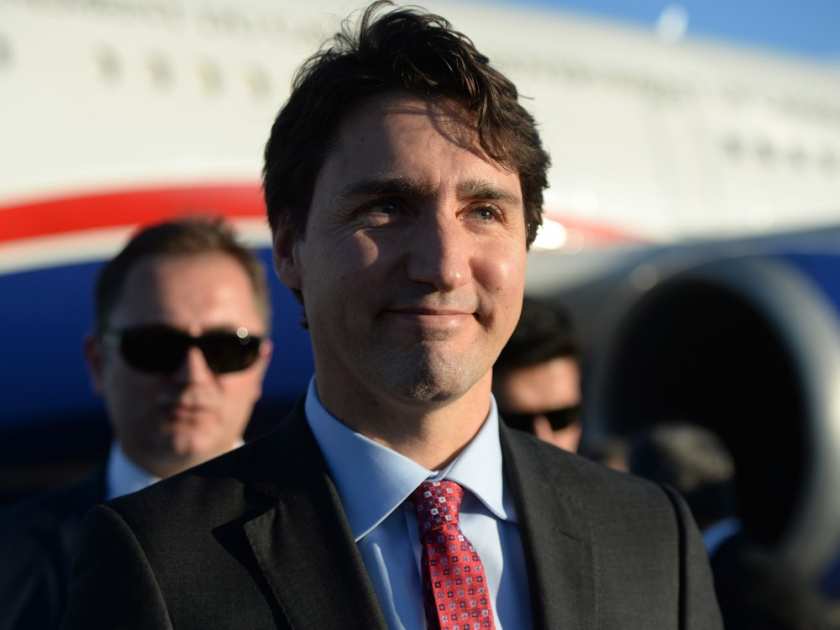
Prime Minister Justin Trudeau, in Turkey for the G20 summit, has said he remains confident 25,000 Syrian refugees can be resettled in a safe and responsible manner.
Public Safety Minister Ralph Goodale Saturday night acknowledged, “There will be obviously logistical challenges to over overcome in getting the job (done) in the time frames that are available. But we’re satisfied, on the basis of what’s available to us at the moment, that we can meet those requirements, but we will not compromise on the quality of the work that must be done.”
But opposition politicians and the national security experts are now expressing growing unease over the potential risks of the government’s year-end resettlement timetable and the enormous security-screening resources required to meet that looming deadline.
The question comes down to “how much risk you can accept” and where to set the security-risk barometer, said Boisvert.
Conservative Leader Rona Ambrose, speaking to reporters in Ottawa Saturday, said the simple math of the Liberal plan is too risky.
“We’re talking about over 500 cases a day that would have to go through security screening,” she said. “My advice to the government is that this is a compassionate goal, Canadians are compassionate people, (but) I think they want to make sure it’s done in a safe way.
“Canadians are asking, ‘Can we do it this quickly, in a secure way?’ And I think that’s an appropriate question.”
Defeated Conservative leader Stephen Harper was criticized during recent election campaign stops for repeatedly declaring that security screening of Syrian refugee claimants was paramount to the effort to preventing ISIL from exploiting the exodus to infiltrate violent extremists into Canada.
The Conservative government’s stance “came on the advice of our security services that it’s better to be safe than to be sorry, and I think that the current government takes the approach the we can just kind of build the plane while we’re flying it,” said Leuprecht.
ISIL is aggressive, tactically crafty and likely to try to exploit any accelerated immigration process. Many terrorism and security experts previously believed such a threat is possible, but limited. Now some are not so sure.
“They have to move cautiously on this,” Bosivert said of the federal government. “It’s a real risk mostly because a lot of refugees left under difficult circumstances and many of them are undocumented, and many are with extended family members, some of whom, who knows if they’re really family members or not?
“You can accelerate the process of screening, (but) the screening process is not infallable, it involves human beings. You need CSIS people on the ground because they’re the ones who do that part of the interview and it takes a lot of them to process 25,000 people.”
CSIS officers overseas are largely responsible for much of the security vetting of refugees and immigrants. Many refugees understandably have no official identity documents. But with Damascus and parts of Iraq an enemy war zone, CSIS officers have no way of easily confirming fleeing refugees are who they say.
If there is nothing on file in Western intelligence agency databases, it is often up to CSIS interviewers to try to pick holes in the refugees’ stories about their identities and political and potentially paramilitary affiliations.
With the stakes now rising, “We’re going to have to start getting smarter, we’re going to have to start using data exploitation and data analytics because you have to sort of verify the bona fides of people, and that’s a challenge because a lot of people are somewhat undocumented,” said Boisvert.
“You want to be able to find ways to risk-profile as many as you can in high speed and then combine that with human intervention around analysis, background checks and interviews.”
One alternative would be the so-called “Australian solution” — mandatory detention of all arriving, undocumented immigrants until their backgrounds are confirmed.
“The Americans do they same thing if you show up undocumented in the U.S. They effectively lock you up until you can establish who you are,” said Leuprecht. “It would be highly controversial because it has never been done in Canada.”
Another alternative would be to monitor those refugees in Canada whose backgrounds may be somewhat suspect. But it typically requires 45 to 60 agents to effectively monitor a single individual over 24 hours.
“CSIS is already pretty maxed out on what they’re being asked to do,” said Leuprecht. “If we’re now going to ask them to (also) monitor some (arriving refugees), I think we need to be careful how thin we spread our resources.”
http://ottawacitizen.com/news/politics/paris-massacre-raises-refugee-resettlement-stakes