
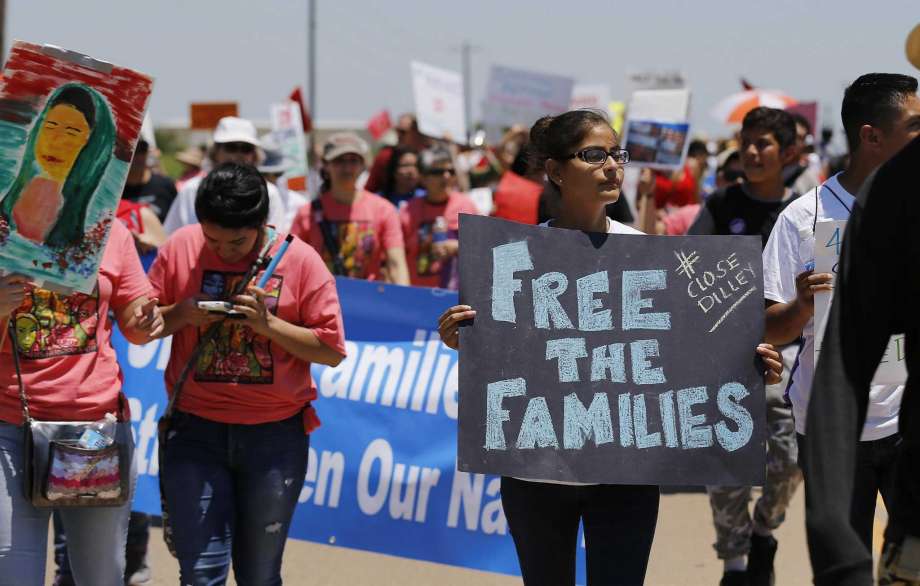
ICE releases nearly 500 from Dilley, Karnes City detention centers over weekend
By Jason Buch
Some of the families had been in detention only a short time and have not yet had their credible fear interviews, the first step in the asylum process, the Refugee and Immigrant Center for Education and Legal Services said in an announcement about the releases.
The Interfaith Welcome Coalition, a group that provides services to families after their release, operates shelters in two houses south of downtown, but a nearby church and convent opened their doors after U.S. Immigration and Customs Enforcement dropped off more than 200 people Saturday, said Amy Fischer, RAICES’s policy director.
“We had people being dropped off after midnight last night, and we expect it to continue today,” Fischer said.
Immigration officials did not immediately respond to a request for comment Monday morning.
RAICES noted the releases came after a judge in Austin on Friday ruled that the state of Texas could not license the detention centers as childcare facilities.
ICE, however, said the releases “were scheduled as a part of normal operations and not in response to the court ruling.”
“ICE is currently reviewing the court’s ruling on the matter of the operating license for the South Texas Family Residential Center,” spokesman Carl Rusnok said. “Operational activities continue without interruption at this time.”
RELATED: Photos show ongoing cat-and-mouse game between agents, immigrants along the U.S.-Mexico border
U.S. Immigration and Customs Enforcement sought licenses for the facilities last year after a judge in California ruled that the Karnes and Dilley centers were in violation of a court settlement governing the treatment of immigrant children.
The centers opened in 2014 to detain the large numbers of women and children crossing the border in South Texas and surrendering to Border Patrol agents to request asylum. Immigrant advocates have said the families being held there are fleeing violence in Central America and are entitled to pursue their asylum cases while living in the U.S. ICE has said the centers are necessary for them to screen families and determine who should be released.
The numbers of families entering the U.S. in the Rio Grande Valley this fall rivaled the records set in 2014.
Twitte: @jlbuch