
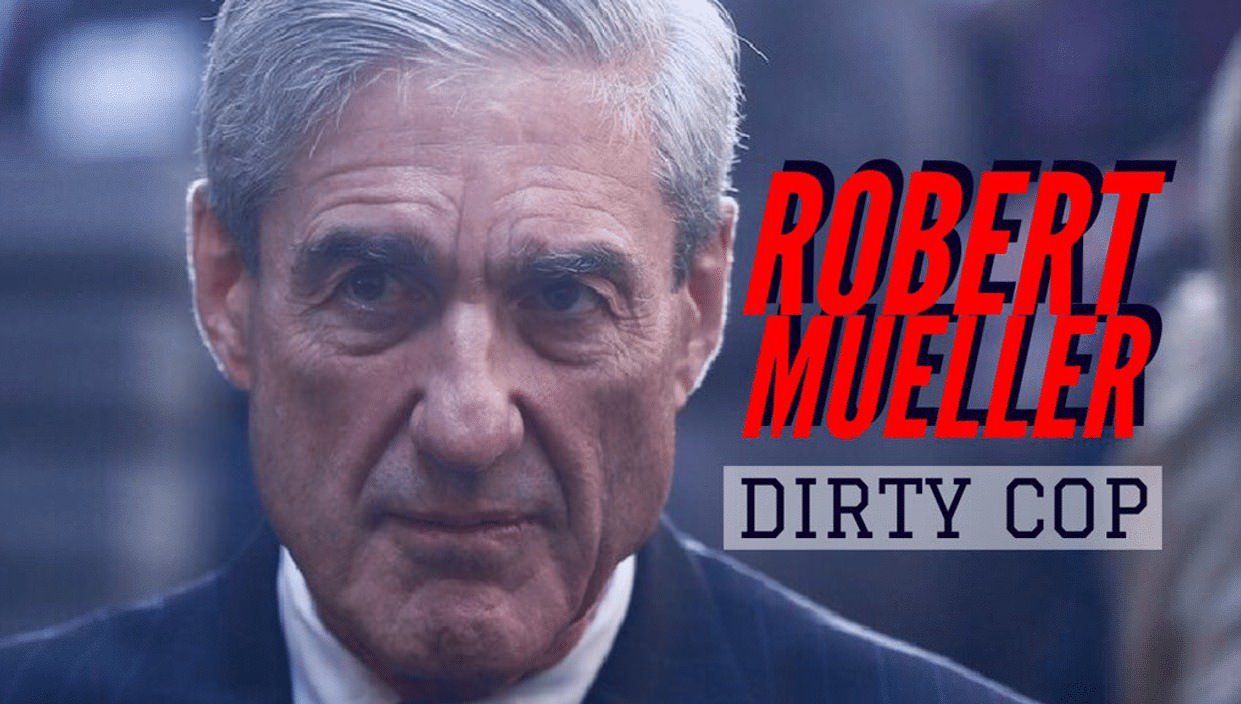
Did Robert Mueller Tap Fusion GPS And Christopher Steele To Assist His Anti-Trump Investigation?
 By Paul Sperry
Special Counsel Robert Mueller spent more than $732,000 on outside contractors, including private investigators and researchers, records show, but his office refuses to say who they were.
Special Counsel Robert Mueller spent more than $732,000 on outside contractors, including private investigators and researchers, records show, but his office refuses to say who they were. While it’s not unusual for special government offices to outsource for services such as computer support, Mueller also hired contractors to compile “investigative reports” and other “information.”
The arrangement has led congressional investigators, government watchdog groups and others to speculate that the private investigators and researchers who worked for the special counsel’s office might have included Christopher Steele and Fusion GPS, the private research firm that hired Steele to produce the Russia collusion dossier for the Clinton campaign.
They suspect the dossier creators may have been involved in Mueller’s operation, and even had a hand in his final report, because the special counsel sent his team to London to meet with Steele within a few months of taking over the Russia collusion investigation in 2017. Also, Mueller’s lead prosecutor, Andrew Weissmann, had shared information he received from Fusion with the media.
Raising additional suspicions, Mueller’s report recycles the general allegations leveled in the dossier. And taking a page from earlier surveillance-warrant applications in the Russia investigation, it cites as supporting evidence several articles—including one by Yahoo! News—that used Steele and Fusion as sources.
Mueller even kept alive one of the dossier’s most obscene accusations—that Moscow had “compromising tapes” of Trump with Russian hookers—by slipping into a footnote an October 2016 text Trump lawyer Michael Cohen received from a “Russian businessman,” who cryptically intimated, “Stopped flow of tapes from Russia.”
Lawyers for the businessman, Giorgi Rtskhiladze (who is actually a Georgian American), are demanding a retraction of the footnote, arguing Mueller omitted the part of his text where he said he did not believe the rumor about the tapes, for which no evidence has ever surfaced.
Mueller’s reliance on the Steele dossier is raising questions because it occurred long after FBI Director James B. Comey described the dossier as “salacious and unverified.” U.S. Rep. Devin Nunes, the top Republican on the House Intelligence Committee, said the report should be renamed “The Mueller Dossier,” because he says it contains a lot of similar innuendo.
Even though Mueller failed to corroborate key allegations leveled in the dossier, Nunes said his report twists key facts to put a collusion gloss on events. He also asserted that it selectively quotes from Trump campaign emails and omits exculpatory information in ways that cast the campaign’s activities in the most sinister light.
Steele’s 17-memo dossier alleged that the Trump campaign was involved in “a well-developed conspiracy of cooperation” with the Russian government to rig the 2016 presidential election in Trump’s favor. It claimed this conspiracy “was managed on the Trump side by Campaign Chairman Paul Manafort, who was using foreign policy adviser Carter Page and others as intermediaries.”
Specifically, the dossier accused Page of secretly meeting with Kremlin officials in July 2016 to hatch a plot to release dirt on Hillary Clinton. And it accused Manafort of being corrupted by Russian President Vladimir Putin through his puppets in the Ukraine.
Likewise, Mueller’s report focuses on Manafort and Page and whether they “committed crimes by colluding with Russian government officials with respect to the Russian government’s efforts to interfere with the 2016 presidential election.” Though the investigation did not establish that Page coordinated with the Russian government, the Mueller report implies there may be a kernel of truth to the dossier’s charges.
“In July 2016, Campaign foreign policy advisor Carter Page traveled in his personal capacity to Moscow and gave the keynote address at the New Economic School,” according to the section on him. “Page had lived and worked in Russia between 2003 and 2007. After returning to the United States, Page became acquainted with at least two Russian intelligence officers, one of whom was later charged in 2015 with conspiracy to act as an unregistered agent of Russia.”
“Page’s July 2016 trip to Moscow and his advocacy for pro-Russian foreign policy drew media attention,” Mueller’s narrative continued. “July 2016 was also the month WikiLeaks first released emails stolen by the GRU [Russian intelligence] from the DNC.” “Page acknowledged that he understood that the individuals he has associated with were members of the Russian intelligence services,” the report added, implying that Page in the 2015 case (referenced above) knowingly cavorted with Russian spies, which echoes charges Steele made in his dossier.
full story at https://thefederalist.com/2019/05/09/robert-mueller-tap-fusion-gps-christopher-steele-assist-anti-trump-investigation/