
Media Preparing The Public For A Future Of Eating Bugs
Chris Menahan
InformationLiberation
Our ruling oligarchs are richer than ever and dining on $400 steaks covered with 24-karat edible gold leaf sheets, they’re actively preparing us plebs for a future of eating bugs.
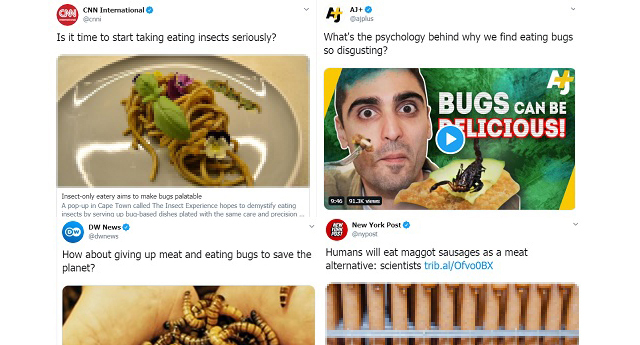
Videos and articles like these are currently being churned out every day:
Is it time to start taking eating insects seriously? https://t.co/aF5T5cHQVh
— CNN International (@cnni) August 12, 2019
How about giving up meat and eating bugs to save the planet? pic.twitter.com/D8A8BqFATf
— DW News (@dwnews) August 16, 2019
What’s the psychology behind why we find eating bugs so disgusting? pic.twitter.com/hsRQ6e24re
— AJ+ (@ajplus) August 18, 2019
Humans will eat maggot sausages as a meat alternative: scientists https://t.co/RbZ2dvno9q pic.twitter.com/TtDrjxx1sD
— New York Post (@nypost) May 1, 2019
Meanwhile, the UN and globalist NGOs are pushing for taxes on testosterone-boosting red meat in the name of fighting “climate change.”
First the taxman came for your cigars, now he might be coming for your steak.
That’s according to a new report sent to Business Insider by research company Fitch Solutions, which concluded that “sin taxes” – levies on products deemed undesirable like tobacco, sugary foods and drinks – could soon be applied to meat.
“Governments could leverage on this demand for more sustainability and tax the consumer instead of implementing stricter environmental production regulations,” Fitch first suggested in May.
Since then, new research by the company predicts such a tax could go global, due to environmental, health and ethical concerns.
“The global rise of sugar taxes makes it easy to envisage a similar wave of regulatory measures targeting the meat industry,” Fitch told Business Insider.
The media is manufacturing this fake “trend” out of thin air.
Just last week, a coalition of cross-party German politicians proposed hiking the value-added tax (VAT) on meat from 7% to 19% in the hopes of cutting consumption.
Like sugar, red meat has been linked to an increased risk of cancer, heart disease, stroke and diabetes, which Fitch said laid the groundwork for similar taxes. A study by University of Oxford, for example, found introducing the measure could prevent almost 6,000 deaths a year and save nearly $850 million in healthcare costs.
“A meat tax could, therefore, emerge as a policy sibling to the sugar tax, supported on the basis that meat does play a role in a balanced diet but over-consumption is a public health issue,” it concluded.
full story at http://www.informationliberation.com/?id=60632