
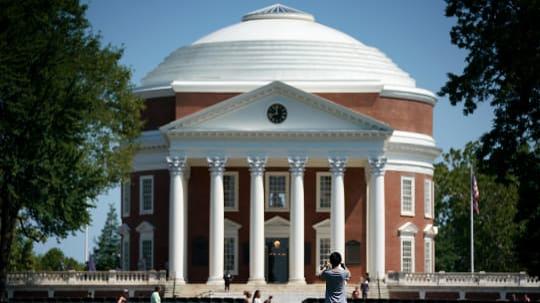
History Professor Says Thomas Jefferson Didn’t Design UVA Walls To Hide Slaves, As Activists Claim
By Ashe Schow
The University of Virginia designed a new athletics logo earlier this year that incorporated the school’s famous serpentine walls. As soon as the design was revealed, however, activists insisted the serpentine walls were built to keep white students from having to view the slaves that worked on the campus.
Now, an architectural history professor at the university is challenging that claim, suggesting Thomas Jefferson actually designed the walls to save on materials and perhaps to keep drunk students from destroying the professor’s gardens. Professor emeritus Richard Guy Wilson told The Washington Free Beacon that while slaves did work on the UVA campus, the walls were not intended to hide them.
“I don’t think they were made for the explicit purpose of hiding slaves,” Wilson told the outlet. “Not to say there weren’t enslaved African Americans working there, but I don’t think it was there to hide them away.”
More from the Free Beacon:
Jefferson’s serpentine wall design was influenced by gardens in Great Britain, where curved walls have been used for centuries to create strong barriers while saving on material. Unlike straight walls, serpentine walls can stand tall with only one layer of brick. The design allows gardeners more control over the sunlight plants receive. Jefferson’s original design notes for the wall, housed at the university library, show he calculated the precise number of bricks he could avoid purchasing by opting for the serpentine style of wall.