
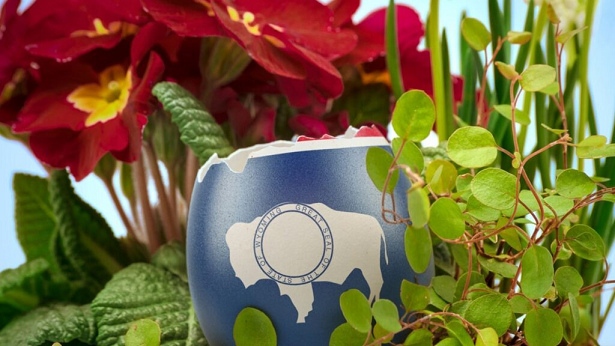
Now in Effect: Wyoming Law Expands Food Freedom Act, Opens Market to Small Egg and Dairy Producers
By Michael Maharrey
Yesterday, July 1st, a Wyoming law went into effect that will further increase food freedom in the state, and potentially alleviate some of the recent price inflation on eggs and dairy.
Sen. Tim Salazar and 10 fellow cosponsors introduced Senate Bill 102 (SF102) on Jan. 12. The new law expands the Wyoming Food Freedom Act to allow a “designated agent” to “facilitate sales transactions” in the marketing, transport, storage, or delivery of food and beverage products. Under previous law, producers could only sell directly to consumers.
The new law will also add eggs and dairy products to the foods that can be sold at farmer’s markets, farms, ranches, producer’s homes or offices, and the retail location of the third-party sellers.
The House passed SF102 by a 62-0 vote. The Senate approved the measure by a 30-1 vote. With Gov. Mark Gordon’s signature, the law went into effect on July 1.
Expanding the market for eggs and dairy could provide some relief for Wyoming residents struggling to deal with price inflation. The price of both eggs and milk has increased precipitously over the last year. Opening up the market to more producers and sellers could help the people of Wyoming to get some relief from the money-printing frenzy of recent years.
WYOMING LEADS THE WAY
Wyoming was the first state to enact a comprehensive Food Freedom Act back in 2015. The law allows the sale of many foods and food products direct from the producer to the consumer without adhering to onerous state regulatory and licensing requirements. The expansive law even allows poultry farmers with fewer than 1,000 birds to sell chicken and turkey, along with products made from their birds outside of the regulatory system. It also authorizes the sale of raw milk, rabbit meat and most farm-raised fish.
In 2020, the state expanded food freedom to allow consumers to buy individual cuts of meat through herd-share agreements. The law is modeled on laws that allow the sale of raw milk in some states. Consumers pay the rancher a fee for a “share” in either an individual animal or a herd. In return, the consumer gets cuts of meat. A second expansion allows for the sale of “non-potentially hazardous” homemade foods to be sold in retail stores and restaurants. “Potentially-non hazardous foods are defined as ” food that does not require time or temperature control for safety and includes jams, uncut fruits and vegetables, pickled vegetables, hard candies, fudge, nut mixes, granola, dry soup mixes excluding meat-based soup mixes, coffee beans, popcorn and baked goods that do not include dairy or meat frosting or filling or other potentially hazardous frosting or filling.
Following Wyoming’s lead, North Dakota and Utah passed similar laws. In 2017, Maine enacted a law that gives local governments the authority to enact ordinances regulating local food distribution without state interference.