
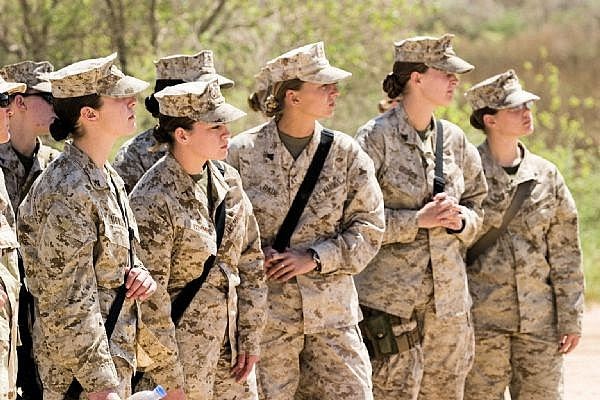
Military Finds Physical Reality Shatters DEI-Fueled Theories About The Sexes
 Elaine Donnelly
Career opportunities are important, but if there is a conflict, the needs of the military must come first.
Ten years have passed since the Department of Defense initiated a social experiment with women in the military. Pentagon officials promised that female trainees headed for previously all-male combat arms units would have to meet the exact same standards as men. Has the experiment played out as promised?
We are about to find out. Secretary of Defense Pete Hegseth’s March 30 memorandum calls for a 60-day review to achieve high, uncompromised standards in combat arms units such as the infantry, special operations, and other occupations with extraordinary physical demands.
Thanks to a series of executive orders that President Donald Trump has issued since January, Hegseth’s six-month implementation period should proceed without equivocation or distractions related to percentage-based diversity, equity, and inclusion (DEI) quotas. Wrote Hegseth, “[I]t is essential to identify which positions require heightened entry-level and sustained physical fitness.”
An honest review of contemporary policies regarding women in the military should reflect sound priorities unrelated to DEI. Career opportunities are important, but if there is a conflict, the needs of the military must come first.
Direct Ground Combat Goes Beyond ‘In Harm’s Way’
As the Center for Military Readiness stated in this CMR policy analysis, implementation of Hegseth’s order must begin with clear definitions of terms, starting with “direct ground combat” (DGC). Direct ground combat arms units such as the infantry, armor, artillery, and special forces in all branches of the service are trained to seek out and attack the enemy with deliberate offensive action.
Physical demands in DGC units typically are greater than those in units and military occupational specialties (MOSs) that serve “in harm’s way” in war zones. Men and women serving in such roles are at risk of contingent or incident-related combat, and those who come under fire are trained to fight back and return to base. Their mission, however, is not to seek out and engage the enemy with deliberate offensive action.
Medical technicians, truck drivers, intelligence teams, and other support troops serve with courage, and all must be prepared for wartime contingencies. More than 150 military women died during war operations in the Middle East since 9/11, including two female Marines who were killed by a suicide bomber during America’s chaotic withdrawal from Afghanistan in 2021.
It is not necessary, however, for all personnel to meet the same physically demanding standards as infantry, armor, artillery, or special operations forces. Nor should tough standards in those units be lowered or “redefined” to meet DEI goals.