
Is It Time To Ignore the Courts?
by C.A. Skeet
The U.S. Constitution is a political masterpiece. The ideas of limited government enshrined therein, with its system of checks and balances, its federalist structure, and its Bill of Rights, is responsible for more freedom and prosperity, not just in America but worldwide, than any other document other than the Bible.
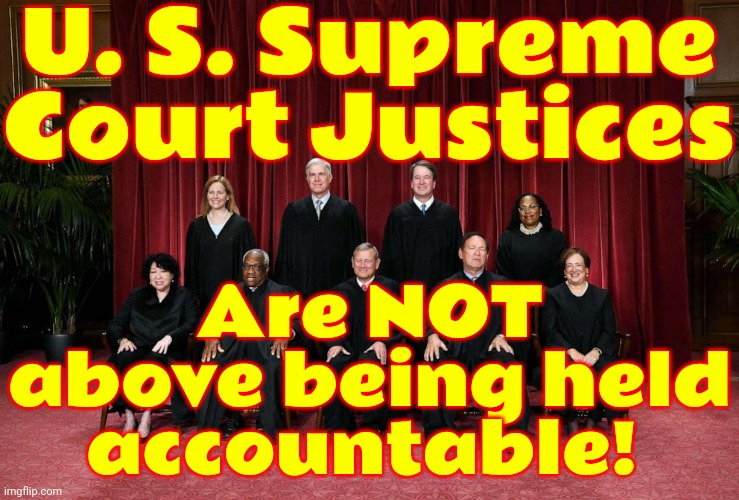
The Constitution only had two glaring flaws. The first was the reluctant tolerance of slavery, which was eventually corrected by the 13th Amendment (and a civil war). The second was a lack of restraint on the powers of the judiciary. There are mechanisms for the legislative and executive branches to check each other, but nothing with which to check the judiciary (other than impeachment, the mere suggestion of which threw John Roberts into a full blown hissy fit last month).
The Founding Fathers never established any checks on the judiciary because the judiciary was never entrusted with the power to declare legislation or executive action unconstitutional. This “right” of judicial review was established out of thin air by the Supreme Court itself in 1803 with Marbury v. Madison. In this case, the court simply declared, on its own and with no authority other than its own declaration, that it reserved the right to void legislation it deemed unconstitutional.
Since then, both the legislative and executive branches (with the exception of Andrew Jackson and Joe Biden) have deferred to the final judgment of SCOTUS in such cases. But they have done so out of tradition and precedent, not out of constitutional necessity. The filibuster is tolerated for the same reasons.
I’m not making the argument that SCOTUS should not have the power of judicial review. If the powers for such a review were amended to the Constitution, it would legitimize a pragmatic and sober addition to our system of checks and balances. But those checks and balances must go both ways in order for the three branches to truly exist as co-equals. If we accept the legitimacy of judicial review, we must also legitimize mechanisms with which to override judicial review when a SCOTUS decision (or any other lower court decision) is in clear violation of the Constitution.
Since such a mechanism would likely require a constitutional amendment, and since that’s not going to happen so long as half the country can’t understand the basic definitions of what constitutes a biological woman and a biological man, the only check that the executive and legislative branches have is simply to ignore SCOTUS rulings, as well as the rulings of whatever corrupt district judge confers upon himself the right to dictate policy clear beyond his purview.
Would ignoring SCOTUS be unconstitutional? No, not if the premise on which their right to review rests, Marbury v. Madison, was unconstitutional to begin with. And since a basic reading of the Constitution grants SCOTUS, or any other court, nowhere near the sweeping powers it established arbitrarily for itself in Marbury V. Madison, the other two branches are not obliged to adhere to it.
Now, before I get put on some bureaucrat’s “extremist” watch list somewhere, let me clarify that I am not fomenting “insurrection.” The insurrection here is being committed by the courts, not the Trump administration. If the Trump administration is governing in full compliance to the Constitution, and the courts are the ones granting themselves extra-constitutional powers, then it is the latter abusing the system. Marbury v. Madison was a blatant power grab, and should be discarded as such. That this usurpation of power is two centuries’ old “precedent” doesn’t make it legitimate.
As President Jackson proved, SCOTUS has no ability to enforce its decisions. It relies solely on its reputation, and on the fact that the legislative and executive branches have been willing to tolerate Marbury v. Madison on the condition that SCOTUS maintains ideological neutrality and an implied understanding on the tenuous limits of its own power. Once SCOTUS betrays those conditions, it relinquishes its moral authority to have its decisions respected.