
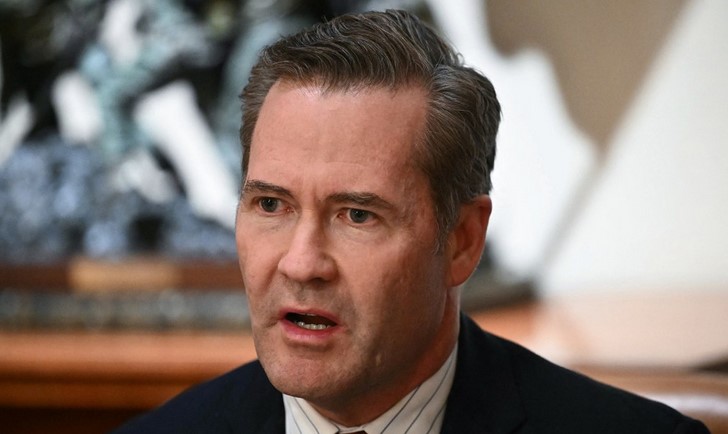
Trump Removes Mike Waltz From National Security Advisor Post
In the first major Cabinet shakeup of his second term, President Donald Trump has removed Mike Waltz from his post as national security advisor.
The president is nominating Waltz for ambassador to the United Nations and appointing Secretary of State Marco Rubio as interim national security advisor until he finds someone to fill the position permanently. The presidential Cabinet member to hold both positions was Henry Kissinger during the Richard Nixon and Gerald Ford administrations. (It would be to the benefit of all Americans if those are the only similarities Rubio and Kissinger share.)
Waltz was among the trigger-happy Cabinet members who favored a military attack on Iran over continued attempts at a diplomatic solution to the nuclear dilemma, according to the April 16 New York Times article “Trump Waved Off Israeli Strike After Divisions Emerged in His Administration.”
Signalgate
Waltz was also at the center of “Signalgate,” a pseudo scandal that erupted March 24 and many believe put him on thin ice with his boss. He was in charge of organizing the Signal group chat about U.S. military strikes on the Houthis in Yemen. The conversation included senior Trump administration officials Vice President J.D. Vance, Defense Secretary Pete Hegseth, Director of National Intelligence John Ratcliffe, Defense Department official Tom Fitton, and others. It also included an unwanted eavesdropper, The Atlantic editor-in-chief Jeffrey Goldberg.
Waltz took responsibility. He said he unintentionally added Goldberg to the chat and attributed the mistake to a technical error. Goldberg, as expected, published news stories about the ordeal, down to a full transcript of the conversation among Trump’s Cabinet members. The mainstream media, also as expected, made much of the embarrassing ordeal. They incessantly blasted headlines about it and implied that it proved the administration was incompetent. The media also suggested the scandal threatened national security. “It’s the kind of security breach — and screw-up — that even Hollywood producers wouldn’t dare conjure,” read the lede to a March 25 USA Today story. “Classified material laws and why experts say Signal chat raises concerns,” screeched a March 25 Washington Post headline. The Guardian went so far as to suggest the faux pas made the United States vulnerable to that all-pervasive boogeyman. “Bulletin sent on 18 March said Russian hackers could access messages as Trump officials now downplay blunder,” the left-wing British outlet declared.
The Atlantic, among the most dedicated of media organs in the tank for the Deep State, said the chat revealed war plans. But Waltz and others in the administration said this was not the case. It did not include information on locations, sources, and methods, they said. “NO WAR PLANS,” Waltz said in a March 26 tweet.