
Why We Can Trust God When Tragedy Strikes, Whether He ‘Allows’ It Or Not

To give a Christian response to the problem of evil means it is possible that God permits evil and suffering because He can bring about a greater good from it.
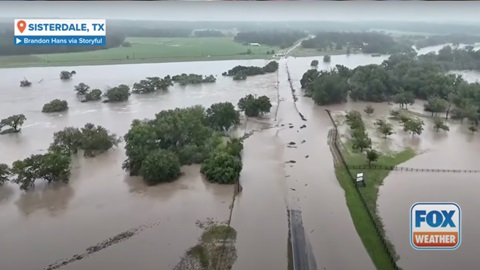
Americans have watched with horror as more than 100 people — and counting — have been found dead following horrific flooding in Texas. Twenty-seven little girls and counselors at Texas’s Camp Mystic were killed — a heartbreaking tragedy that takes the breath away.
Why did God allow this to happen? If God is truly all loving and all powerful, why did He not step in and prevent this tragedy? Is God even good at all? Does He even care?
After his beloved wife Joy Davidman died, C.S. Lewis wrestled with these questions. Journaling his thoughts and emotions, he wrote in A Grief Observed, “Not that I am (I think) in much danger of ceasing to believe in God. The real danger is of coming to believe such dreadful things about Him.”
The Federalist’s Senior Editor John Daniel Davidson, with refreshing honesty, responded to the difficult questions posed above in an enlightening piece. He pointed out that Christians “are called upon to explain how the existence of an omnipotent, omniscient God is consistent with a world beset by death and suffering.”
Indeed, we are. The problem of evil and suffering is the most significant evidence against God’s existence — and Christians cannot shrink back nor shy away from the problem. To do so would be to sell our faith short.
Davidson, however, takes issue with the idea that evil and death might “have some positive role to play in Divine Providence.” It’s true, he concedes (and I agree) that “evil and death are … corruptions of reality that God, in His omnipotence, can redeem and use for His own good purposes.” But to allow for any positive role for evil is “not the orthodox Christian view,” Davidson asserts.
To put it simply, I think this needs correcting.
The Mind of God
Davidson’s assertion that Christians “are not permitted” to believe that God might have allowed the devastation in Texas to “happen for some inscrutable or mysterious reason,” respectfully, goes too far.
As very limited, finite human beings, we are simply not in a good epistemic position to assess whether God has morally sufficient reasons for permitting certain instances of evil to occur. As philosophers J.P. Moreland and William Lane Craig write in Philosophical Foundation for a Christian Worldview, “We have no idea of the natural and moral evils that might be involved in order for God to arrange the circumstance and free agents in them requisite to some intended purpose, nor can we discern what reasons such a provident God might have in mind for permitting some evil to enter our lives.”
“Certainly,” they add, “many evils seem pointless and unnecessary to us — but we are simply not in a position to judge.” Only God — who sees the beginning and end of history and knows all things — can determine these things.
Now, this is not to argue that we know for certain God does have morally sufficient reasons for permitting horrific instances of evil. Much less does it mean we can know what those reasons are. Nor does this argument make evil good in and of itself. Evil is a privation of good; it is something that has gone wrong and is not as it should be. And it has real consequences. But Christians are, in fact, allowed to believe that God might have a justifying reason for permitting evil to occur.