
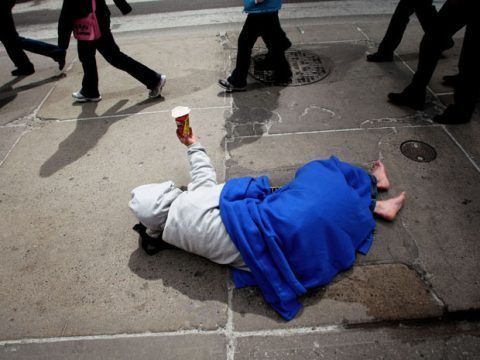
Trump Brings Back Insane Asylums with Executive Order – This Could Crush the Homelessness Epidemic

Many once-great world-class American cities now require residents and visitors alike to keep their heads on a swivel at all times.
Rather than enjoying time exploring, shopping, dining, or otherwise recreating, there looms the constant fear that an aggravated homeless person will start a confrontation or even mount an attack.
A noticeable trend of unpredictable vagrants being allowed to harass residents of major cities has caused quality of life in our nation’s urban areas to decline drastically.
President Donald Trump signed an executive order on Thursday directly addressing these issues and opening the possibility of returning to institutionalization for people who are dangers to themselves and others.
“Endemic vagrancy, disorderly behavior, sudden confrontations, and violent attacks have made our cities unsafe,” the order observed.
“Shifting homeless individuals into long-term institutional settings for humane treatment through the appropriate use of civil commitment will restore public order,” the order added.
“Surrendering our cities and citizens to disorder and fear is neither compassionate to the homeless nor other citizens. My Administration will take a new approach focused on protecting public safety.”
The new directive will allow federal agencies to increase drug enforcement and help states restart their institutionalization processes.
Trump was far from the first official to notice that the shift in how we treat homelessness and vagrancy has been a disaster.
Vern Pierson, the district attorney of El Dorado County, California, penned a commentary piece for Cal Matters a few years ago describing how a movement toward deinstitutionalization in Europe spread across the pond in the 1960s. That was followed decades later by racial justice movements leading to fewer prisoners.
“The result: fewer inmates, and significant increases in homelessness and untreated mental illness,” he wrote.
“As someone with more than 27 years in the pursuit of justice, I worry for the people on the streets, and for the future victims of crime.”