
Here’s What John Wayne Didn’t Teach You About The Great American Gunfighter
 Casey Chalk
In Bryan Burrough’s latest book, The Gunfighters, he sets the record straight on vigilante violence in the Old West.
“The story of the West,” mid-century academic Thomas K. Whipple declared, “is our Trojan War, our Volsunga Saga, our Arthurian cycle or Song of Roland.” Those heroes, as great authors such as Paul Horgan have documented, were soldiers, scouts, mountain men, cowboys, detectives, and clergy. And yet when many of us imagine the Wild West, a period generally lasting from the end of the Civil War in 1865 to the turn of the twentieth century, we think less of such noble figures and more of the lone, mysterious gun fighter, epitomized by such actors as Clint Eastwood in The Good, the Bad, and the Ugly or High Plains Drifter.
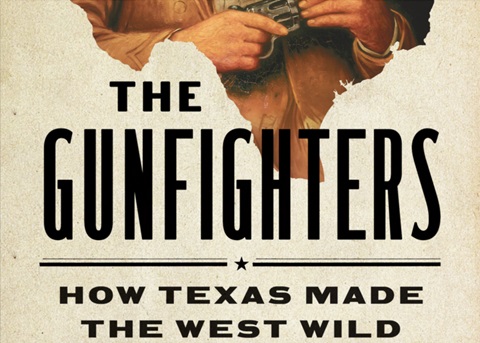
As Bryan Burrough explains in his new book The Gunfighters: How Texas Made the West Wild, much of that has to do with popular interest — reinforced by sensationalist media — that was endlessly fascinated by stories of a rugged and violent frontier where hardened men expertly employed firearms to settle scores or commit felonies. We think of Jesse James, Billy the Kid, or Butch Cassidy roaming vast and untamed western expanses, ever-ready for a quick draw with their revolvers, while gritty lawmen such as Wyatt Earp, Bat Masterson, and Pat Garrett hunted them down. It is a story generations of Americans learned as a catechesis in our peculiar understanding of good versus evil and order versus chaos. In truth, it was mostly chaos.
The Southern (and Texan) Roots of the Wild West
Texas produced far more gunfights and gunfighters than any other state in the Union. “If you study these marquee gunfights at any length, something jumps out at you about the participants. In Kansas, in Wyoming, in New Mexico, in Arizona, all across the frontier, a startling number of these deadly encounters involved a single kind of person: A Texan.”
Some of this was a result of the economic role Texans played in the West, given the outsized importance of cattle drives and cattle ranching in the years after the Civil War — and subsequent cattle rustling, which provoked cycles of violence between ranchers and rustlers.
Texas was a peculiarly martial culture, a result of being the only state to defeat a foreign power (Mexico) at war, as well as having to fight off the brutal Comanche. It was also thoroughly Southern in character, meaning that Texans were often imbued with a deep sense of honor that often provoked fighting and dueling. “Any insult, any slight, anything that might diminish a man’s honor demanded a response, often a violent one,” writes Burrough. On top of that, vigilantism was a more common feature of the South in the antebellum period. All of these cultural trends served to act as a powder keg in the West.
According to Burrough, during the California Gold Rush of the 1850s, more duels were fought in the territory of California than in any other state or territory. Southerners initiated almost all of these duels. The end of the Civil War, which fostered an entire generation of embittered men who understood themselves as an aggrieved and persecuted party in their native states, threw gas on this already kindled Western fire. Burrough notes that the murder rate in some parts of the West was sometimes as much as 60 per 100,000 people, which is about double what we today would consider extremely high. (Chicago’s murder rate in 2024 was an estimated 24 per 100,000.)