
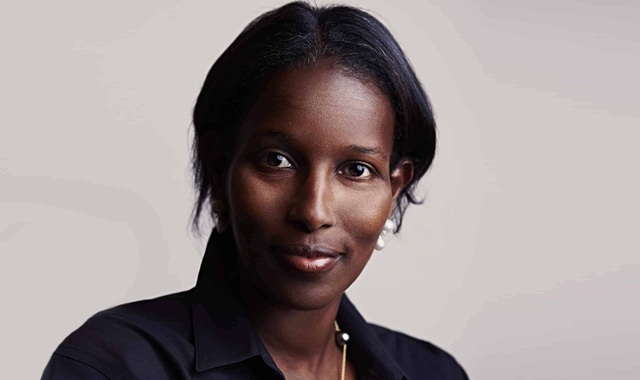
Hirsi Ali: Americans Must Suppress Somali Culture of Civic Corruption
by Neil Munro
Aggressive assimilation is the only fix for the federal government’s decision to import Somalia’s clannish politics of “amoral familism,” says Ayaan Hirsi Ali, a pro-Western refugee from Somalia’s tribal culture.
“I grew up in a Somali clan-based society … [where] Loyalty to kin was absolute. Loyalty to the nation was theoretical at best,” she writes in The Free Press, adding:
Amoral familism is a cultural blueprint. It assumes that resources are scarce, the world is dangerous, and survival depends on extracting maximum benefit for one’s own family. Nation-building makes no sense from that perspective. If a road is built, the question is not “How will this help the community?” but “Which family will control access to it?” If foreign aid arrives, the question is not how to distribute it fairly, but which family will claim control.
This mindset explains why Somalia collapsed. It explains the dysfunction in Afghanistan, Haiti, and parts of North and West Africa. It explains why [progressive] Minnesota now faces problems it can’t make sense of, let alone solve.
But she understates the problem: Elite progressives want to impose foreign cultures on Americans, partly because foreign cultures import enormous problems — such as poverty, welfare dependency, and cheating taxpayers out of $1 billion — that help to sabotage citizens’ Christian-based, egalitarian balance of individualism, civic solidarity, and small government.
Voters have repeatedly rejected the progressives’ ambition to govern Americans’ pocketbooks. In a fallback, progressives want to govern the chaotic diversity imposed by the establishment’s unpopular economic policy of mass migration. In September, former President Barack Obama told his supporters:
There’s never been an experiment [emphasis added] like this, where you have people from every corner of the globe show up in one place … [We] say, based on these ideals — we hold these truths to be self-evident…all men are created equal … and a constitution and a Bill of Rights and a democracy — that we can somehow figure out how to get along and maintain our private beliefs and pray to god in our own ways, and retain aspects of the cultures that we bring from wherever it is that we’re coming from, and yet still decide that we are all Americans … and try to make it better for each successive generation.