
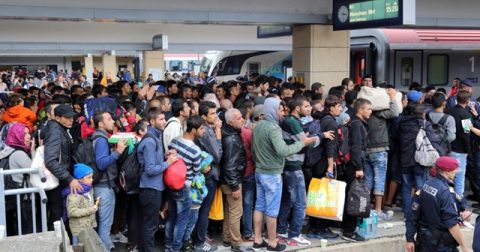
INSA Poll: Half of Germans Say Migration Is the “Country’s Biggest Problem,” Majority See Economic Decline and Free Speech Under Threat
Germany is approaching a political breaking point, and the public knows it—even if the anti-German, anti-European ruling class refuses to act.
A sweeping new survey has confirmed what millions of ordinary Germans experience daily for over a decade now: mass migration has become the country’s most pressing crisis, eclipsing foreign wars, climate rhetoric, and elite talking points.
According to a new poll carried out by INSA, half of the German population now identifies migration as the single biggest problem facing the nation. That assessment comes despite years of mainstream media minimization and demonization of alternative viewpoints, and official government messaging insisting the issue is exaggerated or “solved.”
What makes the poll’s results particularly striking is that this concern cuts across political lines. While 83 percent of Alternative for Germany (AfD) voters rank migration as Germany’s top challenge, substantial shares of voters from other parties quietly agree—even if they continue voting for pro-mass migration platforms.
Among supporters of the liberal-centrist Christian Democratic Union/Christian Social Union, half now say migration is the country’s most serious issue. Even voters aligned with the left-wing nationalist BSW register a majority level of concern, undermining the claim that opposition to mass migration is a fringe—or expressly conservative or right-wing—position.
On the liberal left, denial remains stronger but not total. Roughly one-third of Social Democratic Party of Germany (SPD) voters and nearly a quarter of Alliance 90/The Greens voters acknowledge migration as the nation’s primary problem—a remarkable admission given those parties’ central role in relentlessly pushing open-border policies and persecuting those who opposed them.
These numbers expose a growing contradiction in German politics that has become impossible to ignore. Large numbers of voters recognize the damage caused by uncontrolled migration yet continue to support parties that actively expand it, suggesting political paralysis driven by fear, habit, or left-globalist media pressure.
That paralysis is all the more alarming given recent immigration figures. Despite public opposition, the federal government admitted nearly 400,000 non-EU migrants in 2025 alone, compounding pressure on housing, welfare systems, schools, and public safety—costs overwhelmingly borne by hardworking German taxpayers.
The same INSA survey shows that 65% of Germans believe the country is now in clear economic decline, with bankruptcies rising and industrial competitiveness eroding.