
Iran Buying Chinese Missiles and Russian Rockets as U.S. Military Buildup Intensifies
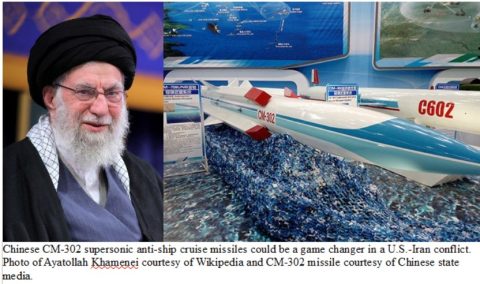
Reuters reports that Iran is close to finalizing a deal with Beijing to purchase CM-302 supersonic anti-ship cruise missiles, according to six sources familiar with the negotiations. Talks began at least two years ago but accelerated after last June’s 12-day Israel-Iran war.
Senior Iranian military and government officials were involved, including Deputy Defense Minister Massoud Oraei. It remains unclear how many missiles are included, the price of the deal, or whether China will complete the transfer amid rising regional tensions.
The CM-302 is widely considered one of the most capable anti-ship missiles currently available. Supersonic and designed to fly at low altitude to evade naval radar, it has a range of approximately 290 kilometers. Military analysts have described the system as a potential “game-changer,” significantly increasing Iran’s ability to threaten U.S. aircraft carriers and destroyers operating in the Persian Gulf and the Indian Ocean.
Marketed by China Aerospace Science and Industry Corporation, the missile can be launched from ships, aircraft, or mobile ground platforms and can strike both maritime and land targets.
Sources say Iran is also discussing additional purchases from China, including surface-to-air missile systems, anti-ballistic weapons, and anti-satellite capabilities. The transfer would represent one of the most advanced Chinese weapons sales to Iran in decades and could violate reimposed U.N. sanctions.
Analysts say the acquisition would help replenish Iran’s arsenal after last year’s war and reflect deepening China-Iran military ties. Without the missiles, Iran faces weakened conventional capacity and remains outmatched militarily. Its regional proxy network has also been degraded by sustained Israeli operations, limiting its ability to quickly reconstitute power.
Lebanon’s government has urged Hezbollah not to become involved if fighting breaks out between the United States and Iran, warning that escalation could trigger severe Israeli retaliation. Foreign Minister Youssef Rajji said Lebanese officials have received indications that Israel would strike civilian infrastructure, including possibly Beirut’s airport, in any renewed conflict. During the 2024 Israel-Hezbollah war, Israel killed much of Hezbollah’s leadership and launched a ground invasion before a U.S.-brokered ceasefire halted major fighting.