
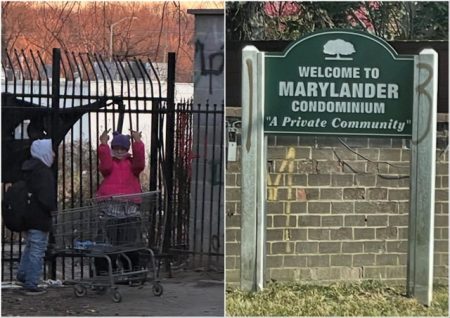
How Private Charity Is Enabling a Homeless Encampment and Hurting Law-Abiding Citizens
by Aaron Sibarium
‘Good Samaritans’ are delivering food to the homeless, who have in turn devastated a condominium complex
he Marylander Condominiums are in limbo after residents of a nearby homeless encampment allegedly vandalized the boiler room, leaving half of the complex without heat and under evacuation orders from a local judge. Some families have already fled to hotels in order to escape the cold. Other residents of the condominium, located in Prince George’s County, Md., could be evicted at any time.
The encampment, though, is still going strong. And unlike the moribund condominium, it is getting plenty of help from private charities.
The Washington Free Beacon identified nearly a dozen church groups, activists, and local businesses that deliver food to the camp on a regular basis. The meals are distributed at the entrance of the encampment, in the parking lot of a nearby McDonald’s, without any pushback from the county, which runs its own on-site delivery program through the Department of Social Services.
The victims of that humanitarian free-for-all have been the condo’s law-abiding residents, many of them low-income minorities. Property managers say the steady supply of food encourages the homeless to remain behind the complex, which has sustained so much damage from the encampment that many condo-owners are on the brink of homelessness themselves.
“If private or faith-based groups are distributing aid absent coordination with enforcement and housing authorities, such actions may inadvertently contribute to the camp’s permanence,” said Phil Dawit, the managing director of Quasar Real Estate, the condo’s property management firm. “Compassion without coordination can unintentionally entrench unsafe conditions—both for individuals living in the camp and for neighboring residents who have experienced repeated trespassing, property damage, drug activity, and criminal conduct.”
This story is based on video footage of food deliveries, social media posts by local activists, and interviews with camp residents. It sheds new light on the constellation of forces, public and private, that have enabled the encampment, even after the county’s half-hearted and unsuccessful attempts to clear it.