
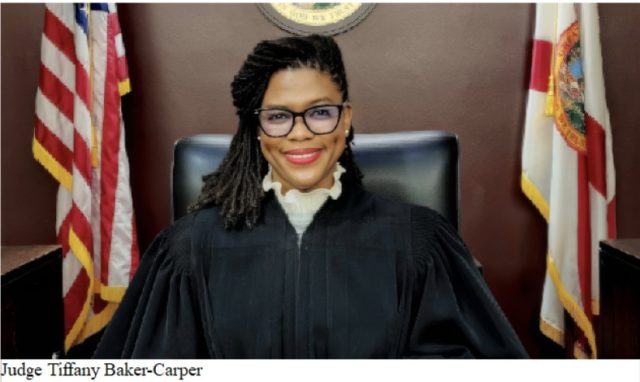
BLOOD ON HER HANDS: Florida Moves to IMPEACH Radical Judge After Sickening Release of Predator Leads to Murder of 5-Year-Old Stepdaughter
Florida state leaders are moving to IMPEACH a judge accused of enabling a horrific child murder, after releasing a convicted sex offender back into the community.
Florida Attorney General James Uthmeier has formally called on the Florida House to begin impeachment proceedings against Leon County Circuit Judge Tiffany Baker-Carper following the tragic killing of 5-year-old Missy Mogle.
The move comes just hours after Governor Ron DeSantis signed “Missy’s Law,” a sweeping reform designed to END the dangerous practice of releasing convicted criminals before sentencing.
The legislation, signed Tuesday in Tampa, is named after Melissa “Missy” Mogle, a child whose life was cut tragically short by a monster who should have been behind bars.
The facts of the case are as gut-wrenching as they are infuriating. Missy’s stepfather, Daniel Spencer, was already a “big-time scumbag” in the eyes of the law.
In April 2025, a jury found Spencer guilty of traveling to meet a minor for sex, a serious felony. Despite this conviction, and despite the desperate pleas of prosecutors who warned that Spencer was a danger to the community, Judge Tiffany Baker-Carper refused to revoke his bond.
She ignored the warnings. She ignored the victim’s safety. She chose to put a convicted pedophile back on the streets—and right back into the home with Missy.
One month later, while out on the bond granted by Baker-Carper, Spencer allegedly murdered 5-year-old Missy by asphyxiation. Evidence later revealed horrific videos of Spencer physically abusing the child, binding her hands and feet, and smothering her with pillows.
Ron DeSantis: “And so, Missy’s Law—House Bill 445—what it does, and this shouldn’t even be an issue… So, you have somebody that’s convicted of a crime—a serious crime. A lot of times, the judge will remand them to custody, then they do a sentencing, and then the judge administers the sentence.
But you don’t release the convict just because you haven’t done sentencing yet.
Now, there are some court systems where they sentence you immediately after conviction. That’s not how it’s done. I know in the military that’s what you do, but that’s not necessarily how it’s done in civil courts throughout the United States.