
Gorsuch Abandons Originalism (Again) With Claims America Isn’t A Christian Nation
 Samuel Kimzey
Justice Gorsuch keeps insisting America was founded as a religiously neutral nation, but the founding-era record tells a very different story.
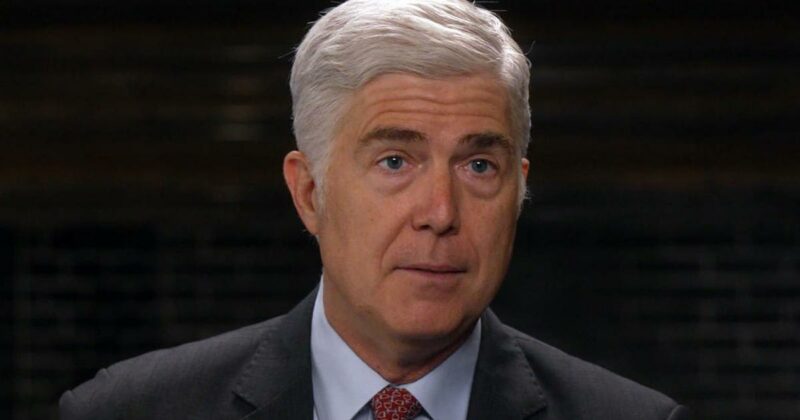
Old habits die hard. At least that is the case for our Supreme Court’s Justice Neil Gorsuch, who persists in repeating the erroneous narrative that America was founded as religiously neutral. In a July 24th interview with PBS’ Margaret Hoover, Gorsuch gave his interpretation of the American founding, denying America was founded as a Christian nation:
“We were never supposed to be a nation that was about one race or one religion … It was about those ideas [in the Declaration of Independence] … We have a First Amendment, for crying out loud. No established religion.”
Gorsuch has previously made this point about his belief in America as ultimately a “creedal nation” founded in shared ideas contained in the Declaration, not more fundamental ties of ethnic kinship or common religion. Gorsuch wants to maintain this position of America as a neutral nation, not preferential to any particular people group or religion. Despite his claims to be an originalist, Gorsuch is not truly original in his beliefs here.
In particular, he misrepresents the numerous ways in which America was founded and perpetuated as a Christian nation, giving public support and favor to Christianity over any alternative religions because its people were Christian.
Understanding the American Founding
Those who share Gorsuch’s view are quick to point to the First Amendment of the U.S. Constitution, which states “Congress shall make no law respecting an establishment of religion, or prohibiting the free exercise thereof.” However, this was only ever intended to prevent Congress from establishing a religion federally, since that would interfere with the local self-government of the states which had distinct religious characters. The First Amendment prohibits the federal government from establishing a national church, but it was intended to preserve the right of the states to establish their own churches — many of which had established churches at the time of the founding and up through 1833. Even when states no longer continued establishing one particular Christian denomination, Christianity was still the dominant religion and upheld through the social and political framework.
As scholar Thomas G. West has documented admirably in his scholarly work Political Theory of the American Founding, some of the states (e.g., Massachusetts) even provided public funding to Christian churches, since they believed that religious education and worship was necessary for maintaining public morals in the regime. Public schools taught the Bible, Christian ethics, and basic Protestant Christian doctrine. Most states not only had laws aligned with Christian morality regulating sexual ethics, but also laws requiring businesses to close on Sundays and laws banning blasphemy and obscenity. Multiple states had religious oaths as tests for public office, which were intended to limit only Christians to holding office.
Even Thomas Jefferson, arguably the most pro-Enlightenment liberal of the American founders, did not reject a role for Christianity in the public square. His famous 1802 line to the Danbury Baptists about a “wall of separation between church and state” has been notoriously abused, and is typically interpreted in isolation from the entire informative context of his official policies. President Jefferson even encouraged Christian ministers to preach Sunday services in Congress.
It is true that the American nation incorporated an unprecedented level of religious toleration so that religious dissenters would not be directly punished for their disagreements of conscience. However, guaranteeing liberty of conscience is not equivalent to a government being neutral on religious questions or even hostile to religion, which is what liberalism came to demand of government in the 20th century.