
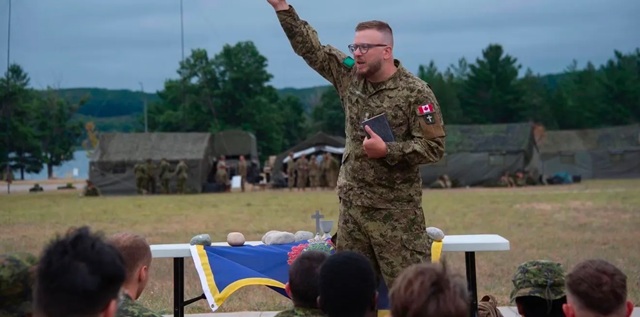
Military expands prayer ban, strips references to God from official ceremonies
Author: Alex Dhaliwal
New directive replaces prayers with “spiritual reflections” at official military events as Conservatives warn of an attack on religious freedom.
The Canadian Armed Forces has expanded its restrictions on public prayer, barring chaplains and anyone providing spiritual services at official military ceremonies from using faith-specific language—including references to God—in a move critics say amounts to an attack on religious freedom.
The new directive, issued July 29, extends rules that previously applied only to military chaplains to all CAF members, Department of National Defence employees, contractors and volunteers providing spiritual or religious services for the military.
Instead of offering prayers at official events, participants are now instructed to deliver a “spiritual reflection” focused on “lessons learned, beliefs, values, and experiences to inspire gratitude, remembrance, hope, and integrity,” as reported by The Epoch Times.
The policy applies to mandatory military events tied to official government business, including graduation parades, change-of-command ceremonies, honours and awards presentations, and Remembrance Day commemorations.
The directive builds on a 2023 policy that replaced traditional public prayers with “reflections” and prohibited references such as “God” and “Heavenly Father” during official ceremonies. The latest version expands those restrictions beyond chaplains while providing more detailed guidance on what is and is not permitted.
Faith-specific prayers remain allowed during private pastoral care, voluntary religious services, and military or state funerals where requested by the deceased or their family.
The directive also permits Indigenous spiritual practices during official events for “cultural, historical, and educational purposes,” provided participation in spiritual elements remains voluntary.
The CAF says the policy is intended to uphold state religious neutrality while respecting Charter rights for both religious believers and non-believers.