

Germany’s AfD Wins Another State — But the Bigger Shock Was What Happened to Chancellor Merz
German voters just delivered a verdict that the country’s political establishment will have a very hard time explaining away.
Alternative for Germany finished first in Sunday’s state election in Mecklenburg-Western Pomerania, while Chancellor Friedrich Merz’s Christian Democratic Union suffered a result that would have been unthinkable not long ago: it failed to win enough votes to enter the state parliament at all.
One bad night can be dismissed. A governing party vanishing from parliament while its chief rival more than doubles its support is an earthquake.
The first projection showed the scale of the revolt before the official count was complete:
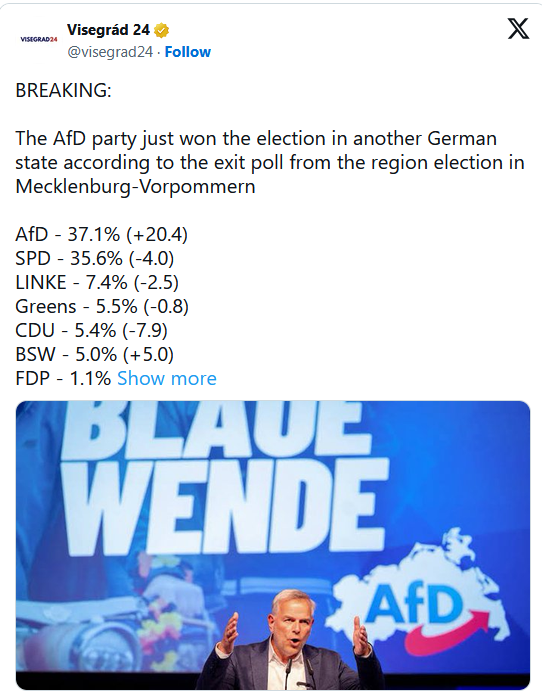
The preliminary official result was even stronger for AfD. According to the Mecklenburg-Western Pomerania state parliament, AfD won 38.2% of the vote and 32 seats.
The Social Democrats finished second with 35.5% and 29 seats. The Left took 6.5% and five seats, while the Greens received 5.7% and five seats.
Merz’s CDU landed at just 4.9%, below the threshold required to enter parliament. In a 71-seat chamber, the party leading Germany’s federal government will now have no representation at all.
AfD’s share more than doubled from the previous state election, when it finished a distant second. This time, it came within three seats of an outright majority.
The official seat totals also reveal the difficult governing math ahead. AfD is the largest force by a wide margin, but every other party has promised to keep it out of power.
Merz called the outcome a disaster. He was right about that much.
But this disaster did not arrive without warning. The chancellor entered the election under extraordinary pressure, with a string of surveys showing deep public dissatisfaction with his leadership.