
Top Army General Warns America’s Next War Could Reach U.S Soil
by David Lindfield
Army leaders are preparing for American military bases, transportation networks, and communications systems to come under attack before troops can reach an overseas battlefield, warning that drones, cyberattacks, and long-range weapons are changing the demands of homeland defense.
The shift comes as the Pentagon warns that China has positioned cyber capabilities inside American critical infrastructure networks that could disrupt military mobilization during a conflict.
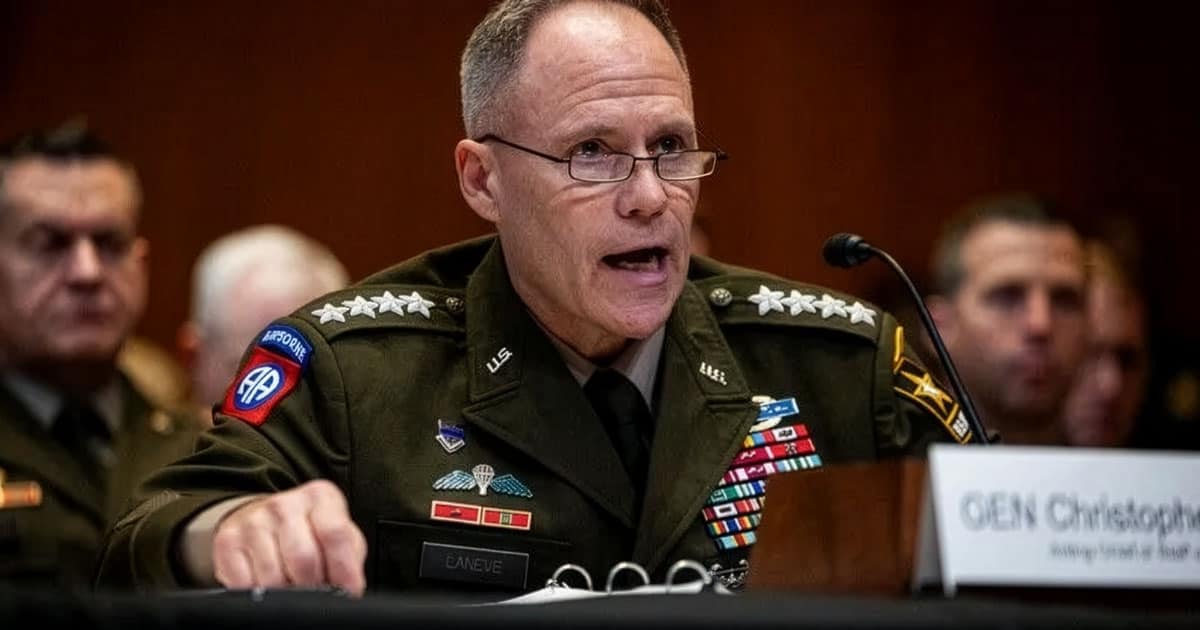
“If we’re going against a pacing threat, power projection will be contested,” acting Army Chief of Staff Gen. Christopher LaNeve warns.
Army Rethinks Assumptions About Security at Home
LaNeve says the military can no longer rely on assumptions that shaped operations in Iraq and Afghanistan, when forces could largely count on secure bases and supply lines inside the United States.
“During the Global War on Terror, we took a lot of things for granted, because we could,” LaNeve said during a roundtable at the Association of the United States Army’s annual conference in Washington.
In a conflict with China, attacks on domestic infrastructure could delay American forces before they deploy.
U.S. officials have already confirmed drone incursions over installations including Joint Base Langley-Eustis in Virginia and Picatinny Arsenal in New Jersey.
Those incidents have not been publicly attributed to China.
The Army’s new “How the Army Fights” framework emphasizes deploying, communicating, and sustaining operations while bases, supply lines, and communications networks are disrupted.
“It was important to get this document out to provide a direction for our Army, a stake in the ground in where we’re moving,” LaNeve says.
Troops Must Operate With Communications Cut
The framework also addresses how troops can keep moving and fighting when an adversary knocks out their communications.
“I think what you would see inside this command and control capability is the ability to operate disconnected and then reconnect when you have that capability, but to continue to be able to maneuver,” LaNeve says.
Joint Interagency Task Force 401 is working with federal and local law enforcement to strengthen counter-drone defenses around military installations and critical infrastructure.
Acting Army Secretary Adam Telle points to the southern border as a real-world testing ground for counter-drone technology.