
Europe Continues Slow Right Turn With Elections in Hungary and Bulgaria
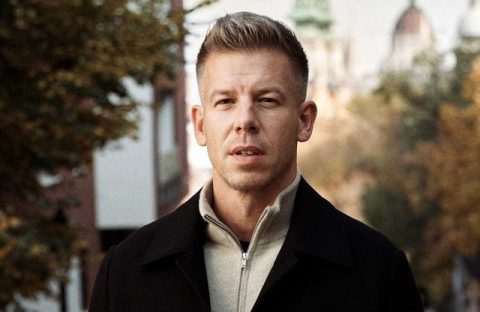
When Viktor Orbán was voted out in Hungary, on April 12, liberals celebrated. His replacement, Péter Magyar, however, immediately pushed back against accepting migrants and appears to be the worst outcome for the left: a relative conservative who also holds broader internal support than Orbán ever had.
Magyar’s Tisza Party secured 138 seats in the 199-seat parliament on 53.6% of the vote, while Orbán’s Fidesz took just 55 seats with 37.8%. Magyar had been a high-ranking Fidesz insider and former husband of the Justice Minister, which allowed him to appeal to conservative rural voters while promising structural reforms to liberals, restoring the rule of law, combating corruption, and joining the European Public Prosecutor’s Office.
On the issues that defined Orbánism, Magyar is not breaking with his predecessor. He stated flatly that Hungary takes a “very strict stance on illegal migration,” that it will not accept “any pact or allocation mechanism,” and that the southern border fence will be kept and reinforced. From June 1, 2026, all work permits for non-European migrants will be terminated, with the aim of reducing new arrivals to zero. On sovereignty, Magyar stressed that Hungary’s history “is written by the Hungarian people, not in Moscow, not in Brussels, and not in Washington.”
Analysts have noted that Magyar’s positions on border control and demographics “remain in line with the anti-immigration and pro-family policy developed by Orbán, sometimes even appearing more radical than his predecessor.” Where he genuinely differs is on corruption, rule of law, and media freedom, and to a lesser degree on Russia. He has pledged to lift Hungary’s veto on the €90 billion EU loan to Ukraine, which Orbán had blocked, and has described Russia as a security risk.
But his positions on Ukraine stop well short of the EU mainstream. He opposes arms deliveries to Ukraine, opposes deploying Hungarian troops or transferring weapons from Hungarian territory, and insists Ukraine can only join the EU following a referendum in Hungary, according to the Carnegie Endowment for International Peace. He has also said the rights of the Hungarian minority in Transcarpathia are being eroded.
On Russian energy, structural constraints are severe regardless of Magyar’s intentions. Hungary expanded its reliance on Russian crude from 61% in 2021 to 93% by 2025, according to the Center for the Study of Democracy. Magyar has promised to end Russian oil imports by 2035, but the country remains locked into long-term Gazprom contracts and the TurkStream pipeline. The Carnegie Endowment notes that the circle of Hungarian beneficiaries from energy dependence on Russia extends well beyond Orbán, meaning Magyar will face domestic resistance to any rapid shift.